Introduction
Every proposal is an opportunity. But for most freelancers and agencies, writing proposals is one of the biggest productivity bottlenecks.
Research the client. Understand their requirements. Write the scope. Estimate pricing. Create timelines. Format everything professionally. Repeat.
Do this several times a week, and suddenly you're spending more time writing proposals than delivering client work. That's why more agencies are turning to AI.
But is AI actually better than writing proposals manually? Let's compare.
Manual Proposal Writing
Writing proposals manually gives you complete control. You can carefully craft every sentence, customize every section, and ensure the proposal perfectly reflects your expertise.
Benefits:
- Complete creative control
- Highly personalized messaging
- Strong brand voice
- Easier to add strategic insights
- Better for enterprise or high-value projects
The Downsides of Manual Writing
Manual proposals take time. A lot of time.
Most agencies repeatedly write the same sections:
- Company introduction
- Services
- Process
- Deliverables
- Timeline
- Pricing
- Next steps
The wording changes. The structure rarely does. This repetitive work slows your sales process and reduces the number of proposals you can send.
AI Proposal Writing
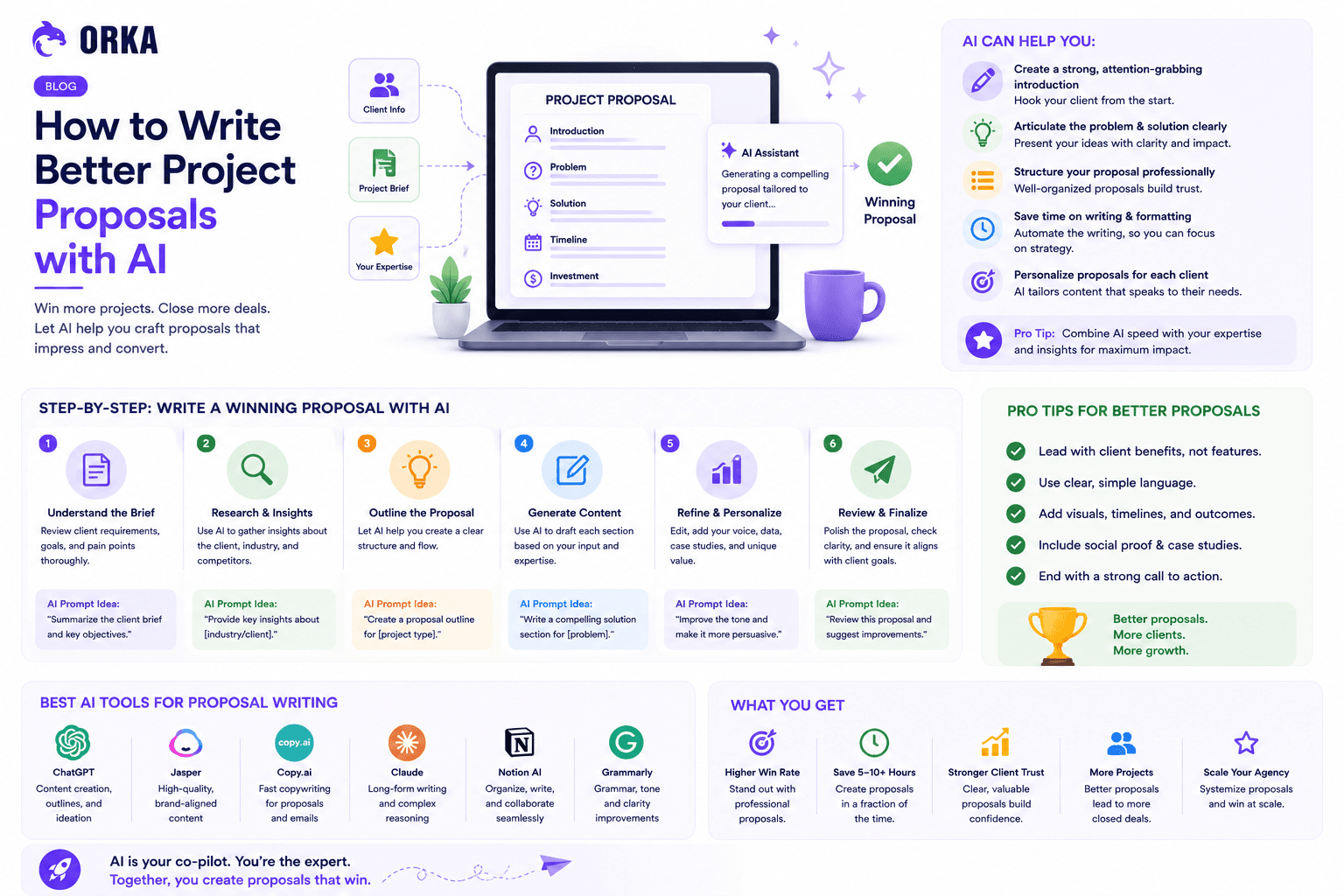
AI changes where your time is spent. Instead of starting with a blank document, you provide project details and AI creates a structured proposal draft.
Within minutes, you have:
- Executive summary
- Client pain points
- Proposed solution
- Scope of work
- Timeline
- Deliverables
- Pricing framework
- Next steps
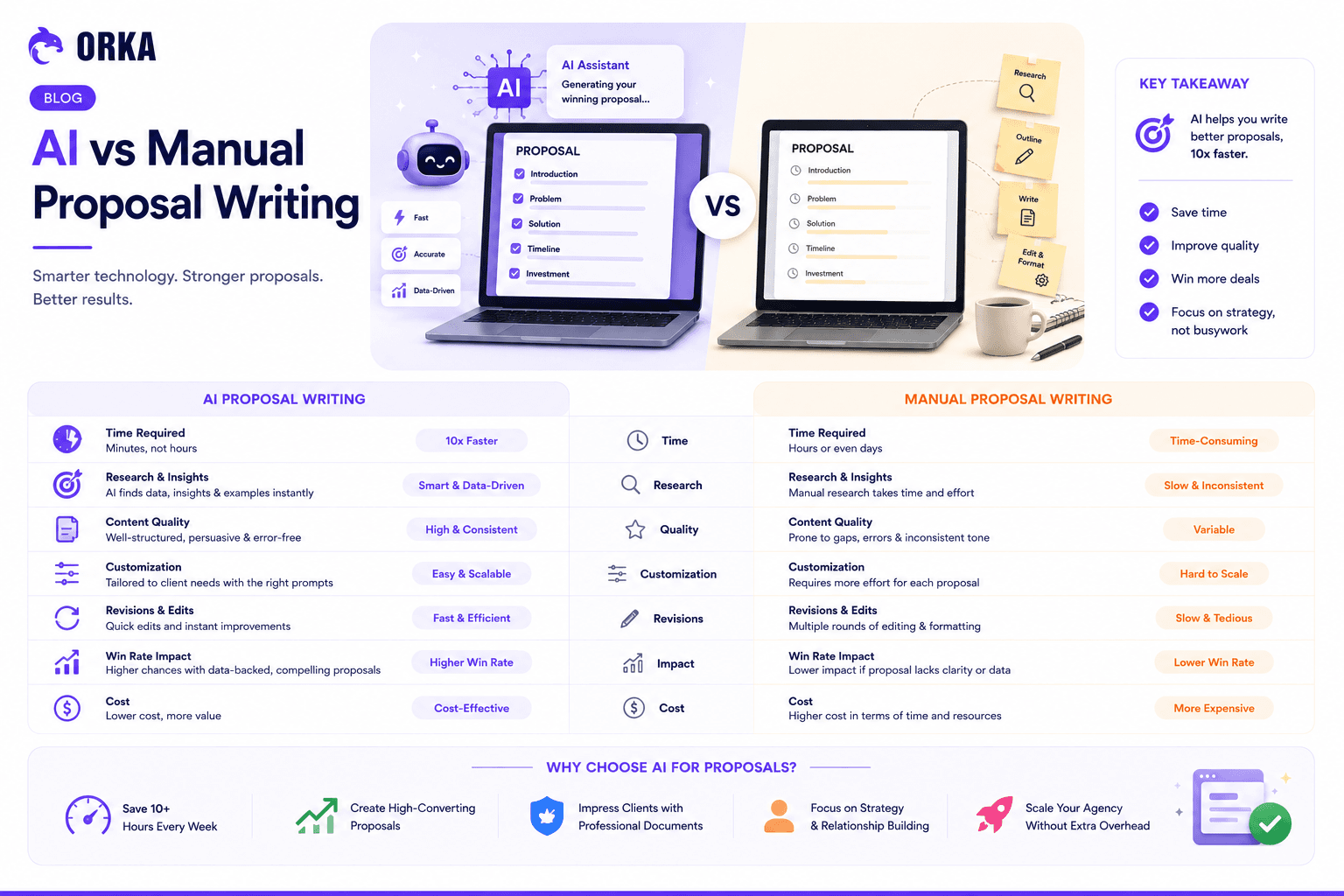
Speed Comparison
Here's how the two approaches compare:
Personalization
One common misconception is that AI creates generic proposals. It doesn't. Generic prompts create generic proposals. Detailed prompts create personalized proposals.
Provide AI with information like:
- Client goals
- Industry
- Budget
- Timeline
- Existing challenges
- Desired outcomes
Consistency Matters
When multiple people write proposals manually, quality often varies. Some proposals include timelines. Others don't. Some explain deliverables clearly. Others skip important details.
Human Expertise Still Wins
AI is excellent at organizing information. It isn't a replacement for experience.
Clients still expect strategic thinking. They want to know:
- Why your approach is different
- How you'll solve their problem
- Why your timeline makes sense
- What success will look like
The Best Workflow
The most effective agencies combine both approaches:
How ORKA Uses AI for Proposal Creation
At ORKA, proposals aren't isolated documents. They're the beginning of your entire client workflow.
With ORKA, you can:
- Generate AI-powered proposals in minutes
- Personalize every proposal before sending
- Define deliverables and milestones
- Convert approved proposals into contracts
- Turn milestones into project timelines
- Connect invoices and payments automatically
- Manage everything inside a dedicated client workspace
Final Thoughts
The debate isn't really AI vs Manual Proposal Writing. It's repetitive work vs valuable work.
Writing proposals from scratch every time doesn't make your agency better. Understanding your clients does.
Key Takeaways
- Manual proposal writing offers maximum control but requires significant time.
- AI dramatically reduces proposal creation time by generating structured first drafts.
- Personalized AI prompts produce better proposals than generic templates.
- Human expertise remains essential for strategy, pricing, and relationship building.
- The best workflow combines AI-generated drafts with manual review.
- ORKA connects AI-powered proposals with contracts, milestones, projects, invoices, payments, and client workspaces to streamline the entire client lifecycle.
Ready to Write Better Proposals in Less Time?
ORKA is the AI-powered operating system for modern service businesses. Generate smarter proposals, create contracts, manage projects, track milestones, automate invoices, and handle payments — all from one connected platform.
Spend less time writing proposals and more time winning clients.