Introduction
Landing an international client feels like a major milestone. Your portfolio finally reaches companies in the US, Europe, Australia, or the Middle East. The project goes well. The client is happy. Then comes the final step — getting paid.
Suddenly you're dealing with currency conversion, international transfer fees, payment delays, exchange rate fluctuations, and banking restrictions. For many freelancers, cross-border payments become the most frustrating part of working globally.
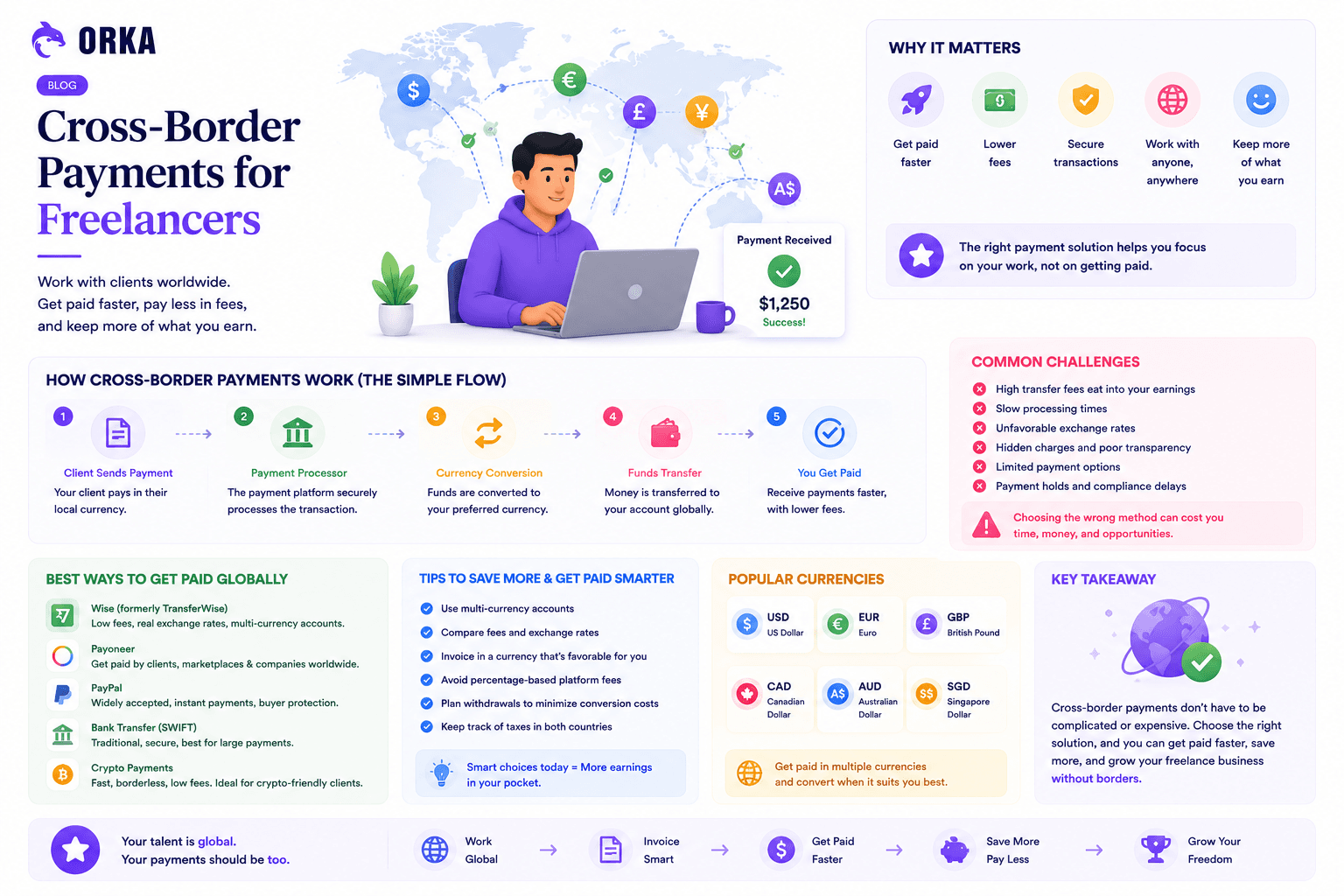
What Are Cross-Border Payments?
A cross-border payment is simply a payment sent from one country to another. For freelancers, this usually means receiving payment from international clients.
Unlike domestic payments, international transfers often involve:
- Multiple banks
- Currency conversion
- Compliance checks
- Additional transaction fees
Common Challenges Freelancers Face
Working internationally comes with incredible opportunities — but also a few obstacles.
How to Make International Payments Easier
There are several practical steps you can take to reduce friction with cross-border payments.
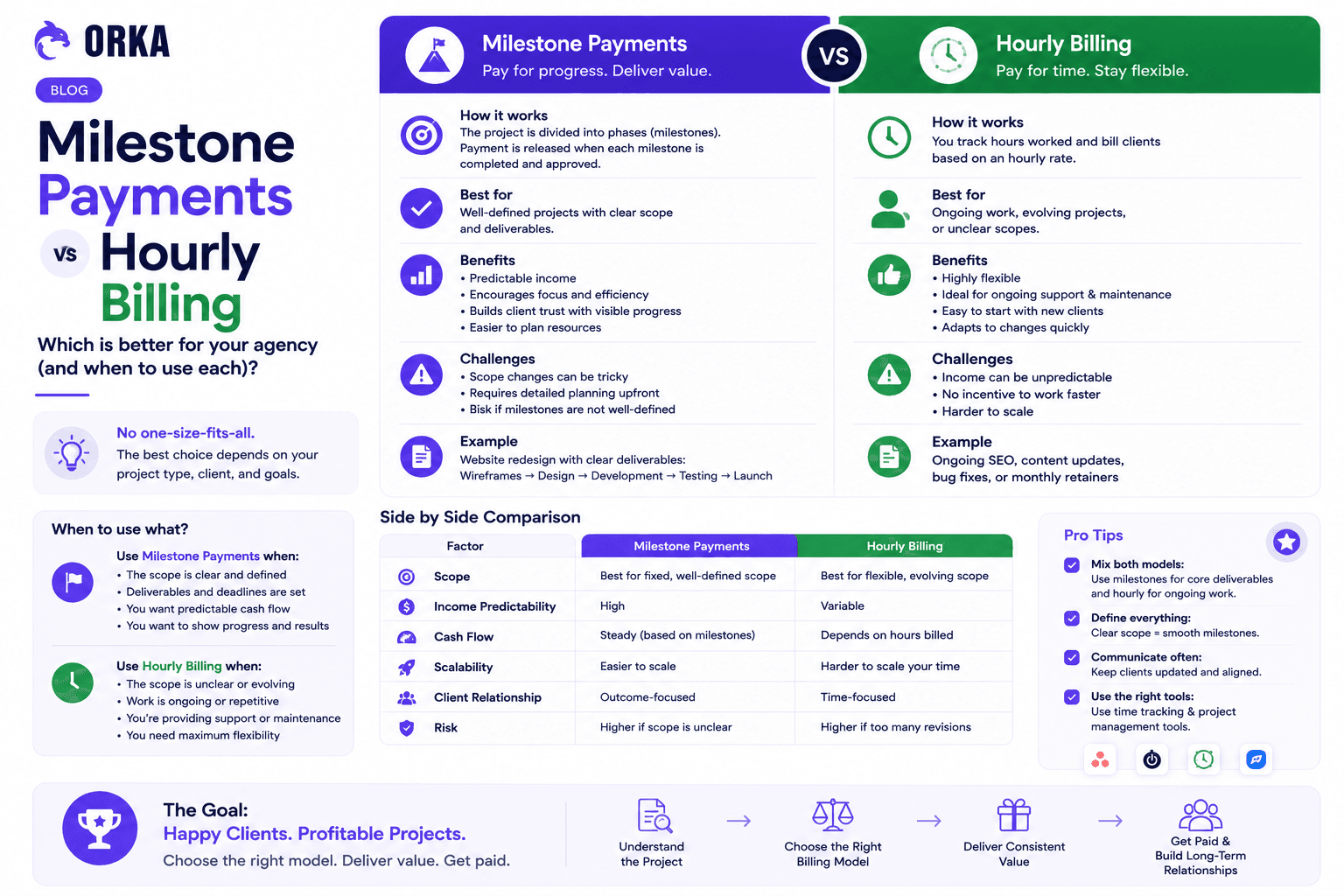
Use Milestone Payments
Instead of waiting months for one large payment, divide projects into smaller milestones.
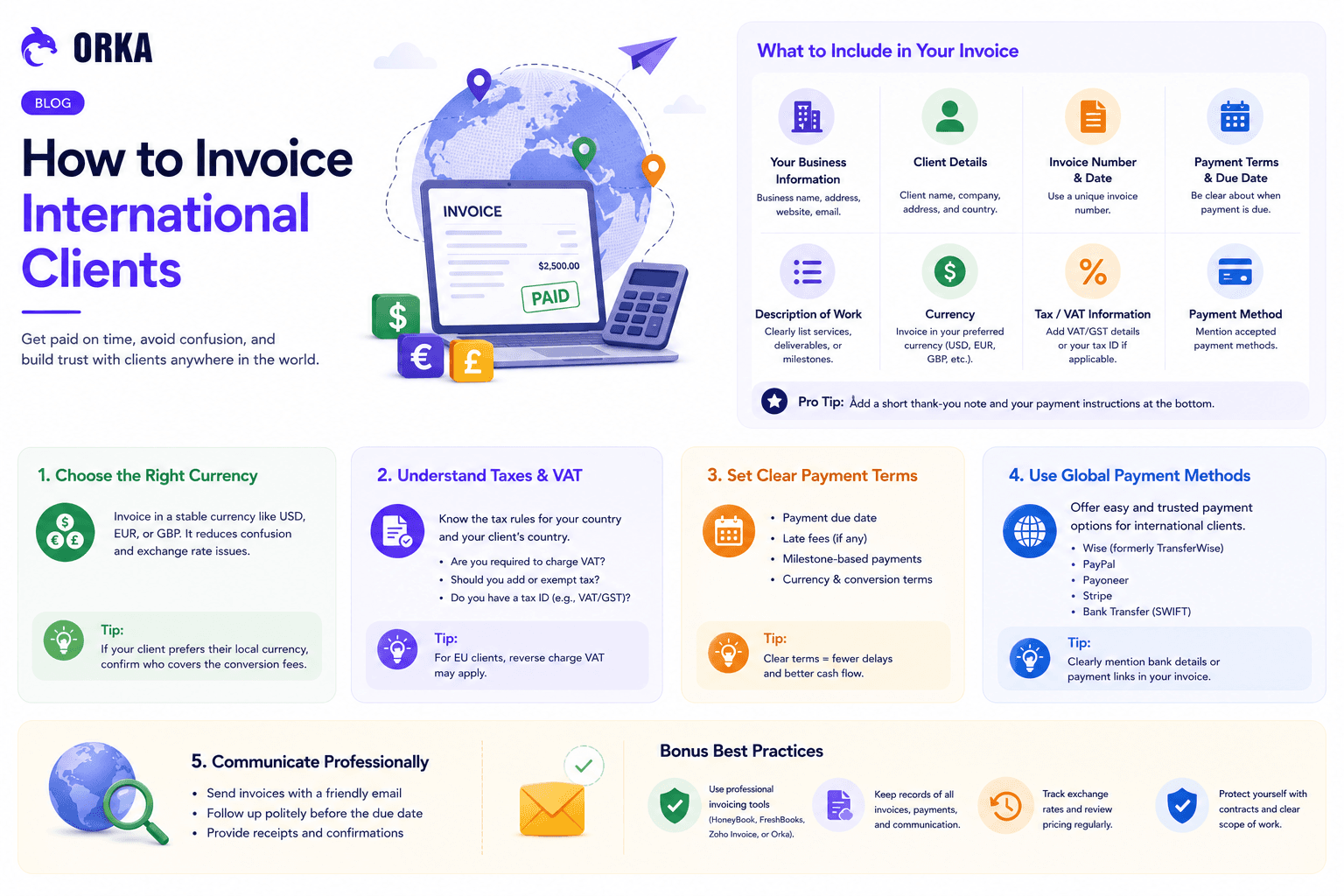
Send Professional Invoices
A complete invoice should include:
- Invoice number
- Client information
- Payment amount
- Currency
- Due date
- Payment instructions
Choose Reliable Payment Platforms
Not every payment method is suitable for international business. When evaluating payment solutions, consider:
- Transaction fees
- Supported countries
- Currency conversion
- Processing speed
- Security
- Transparency
Keep Payment Records Organized
As you work with more international clients, tracking payments manually becomes difficult.
Maintain records of:
- Paid invoices
- Pending invoices
- Currency received
- Payment dates
- Client history
Why Trust Matters Even More Across Borders
When working with someone in another country, both sides face uncertainty. Clients worry whether the work will be delivered. Freelancers worry whether they'll actually get paid.
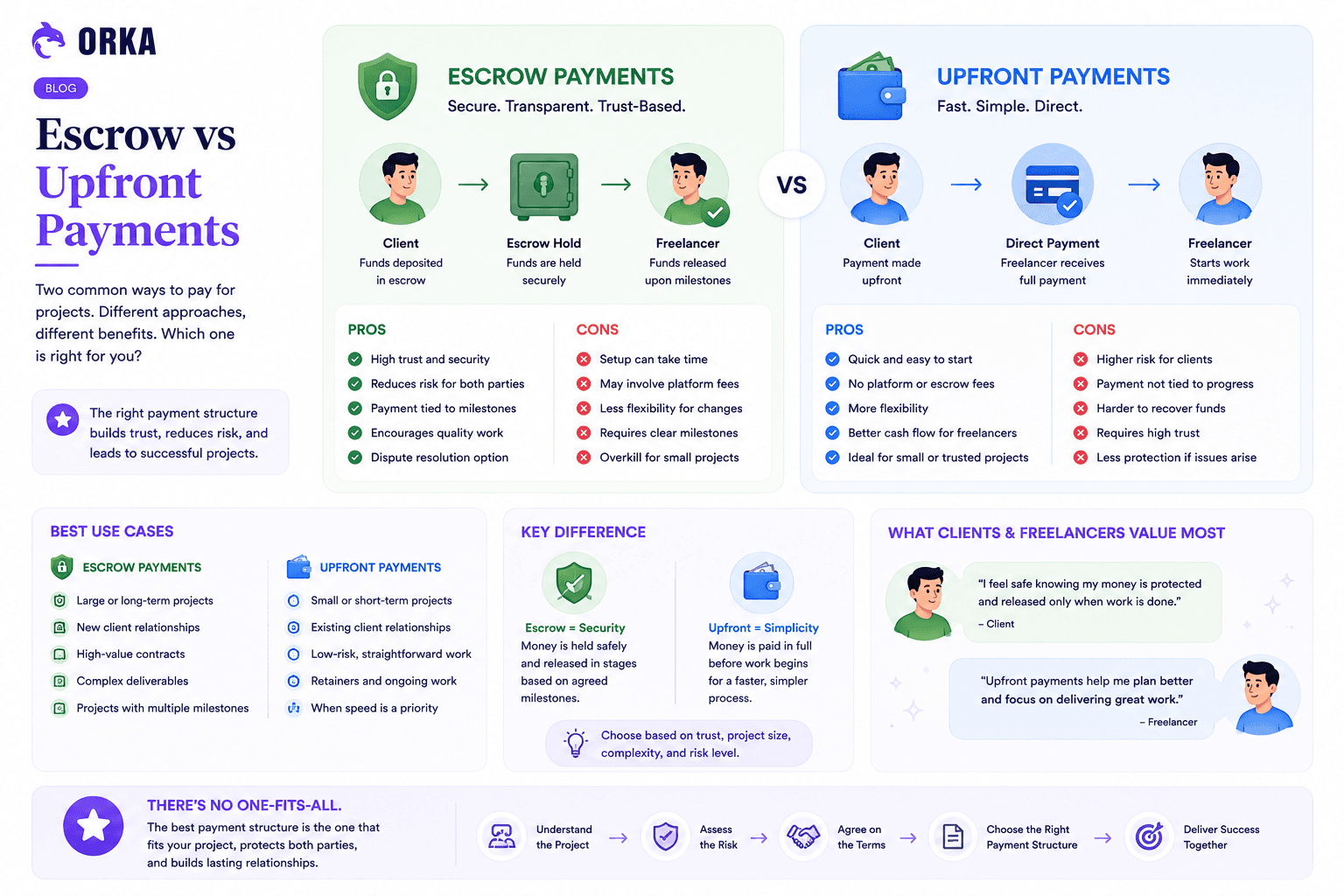
Escrow Makes International Projects Safer
One of the biggest improvements in cross-border freelancing is milestone-based escrow. Instead of paying everything upfront — or waiting until the end — clients fund the project in advance. The money remains securely held until agreed milestones are completed.
This approach offers several advantages:
- Funds are secured before work begins
- Clients approve work before payments are released
- Freelancers know the payment already exists
- Both parties share less financial risk
Traditional International Payments vs Modern Workflows
How ORKA Simplifies Cross-Border Payments
ORKA was built for modern service businesses working with clients around the world. Instead of managing proposals, contracts, invoices, projects, and payments across multiple tools, everything is connected in one workspace.
With ORKA, you can:
- Generate AI-powered proposals
- Create professional contracts
- Organize international client workspaces
- Define milestone-based payment schedules
- Use secure escrow for high-value projects
- Track invoices and payment status
- Manage every client from one dashboard
Final Thoughts
The future of freelancing is global. Clients no longer care where you live. They care whether you can deliver great work.
But international growth requires a payment system that is just as professional as your services.
Clear contracts. Professional invoices. Milestone payments. Secure escrow. Transparent workflows.
Key Takeaways
- Cross-border payments often involve higher fees, slower processing, and currency conversion.
- Set payment expectations before work begins.
- Use milestone payments instead of waiting until project completion.
- Send professional invoices with clear payment instructions.
- Keep payment records organized for every international client.
- Escrow provides additional security and trust for cross-border projects.
- A connected payment workflow creates a better experience for both freelancers and clients.
Ready to Work With Clients Around the World?
ORKA helps freelancers, agencies, and modern service businesses manage AI-powered proposals, contracts, milestone-based escrow payments, projects, invoices, and client workspaces — all from one unified operating system.
Build trust across borders and get paid with confidence.