Introduction
Landing your first freelance client feels amazing. Landing your tenth feels even better. But eventually something changes.
Your calendar is full. Your inbox never stops growing. Clients keep coming in... yet your income has a ceiling because your time has one too.
That's when many freelancers start asking: "Should I build an agency?"
The answer isn't simply hiring more people. It's learning how to build a business that doesn't rely on you doing every task yourself.
Freelancer vs Agency: What's the Difference?
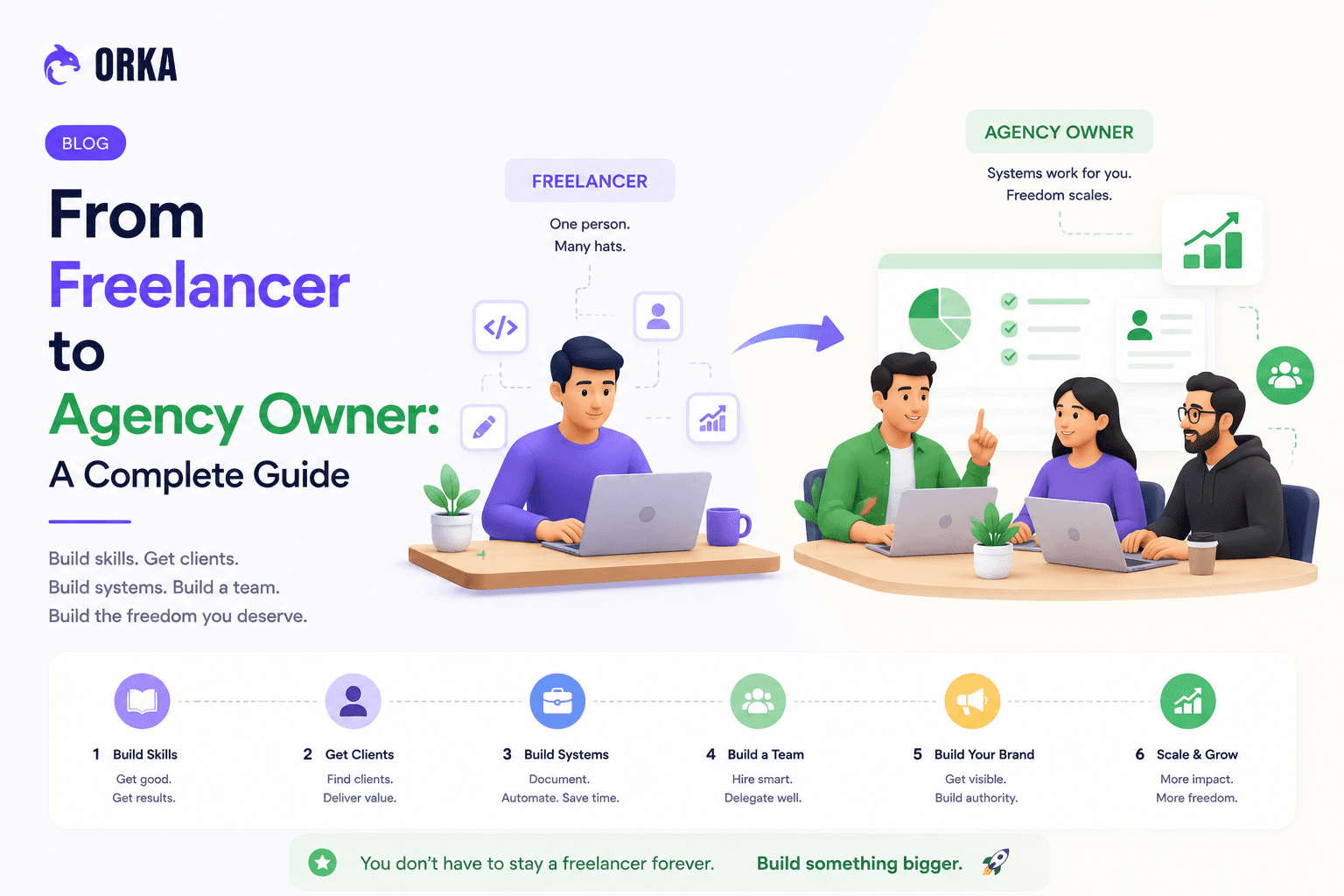
Many people think agencies are simply freelancers with employees. They're not.
A freelancer sells their own time. An agency sells a repeatable service delivered by a team.
Becoming an agency owner means shifting from doing the work to building the system that delivers the work.
Step 1: Standardize Your Services
Before hiring anyone, simplify what you sell. Many freelancers try to offer everything. Instead, define a few core services.
For example:
- Website Design
- Web Development
- Branding
- SEO
- Social Media Management
- AI Automation
Clear service packages make projects easier to estimate, delegate, and deliver consistently.
Step 2: Build Repeatable Processes
Imagine onboarding every new client from scratch. New emails. New documents. Different workflows. That quickly becomes overwhelming.
Instead, create a repeatable process:
- Lead
- Discovery Call
- Proposal
- Contract
- Project Setup
- Milestones
- Delivery
- Payment
When every client follows the same journey, your business becomes easier to manage and scale.
Step 3: Hire for Weaknesses, Not Ego
Your first hire shouldn't be based on what sounds impressive. It should solve your biggest bottleneck.
Ask yourself:
- Are proposals taking too much time?
- Is design slowing down development?
- Are client meetings consuming your day?
- Are invoices being forgotten?
Hire the role that removes the biggest obstacle from your workflow. The goal isn't to build a large team overnight. It's to create leverage.
Step 4: Stop Charging Only for Time
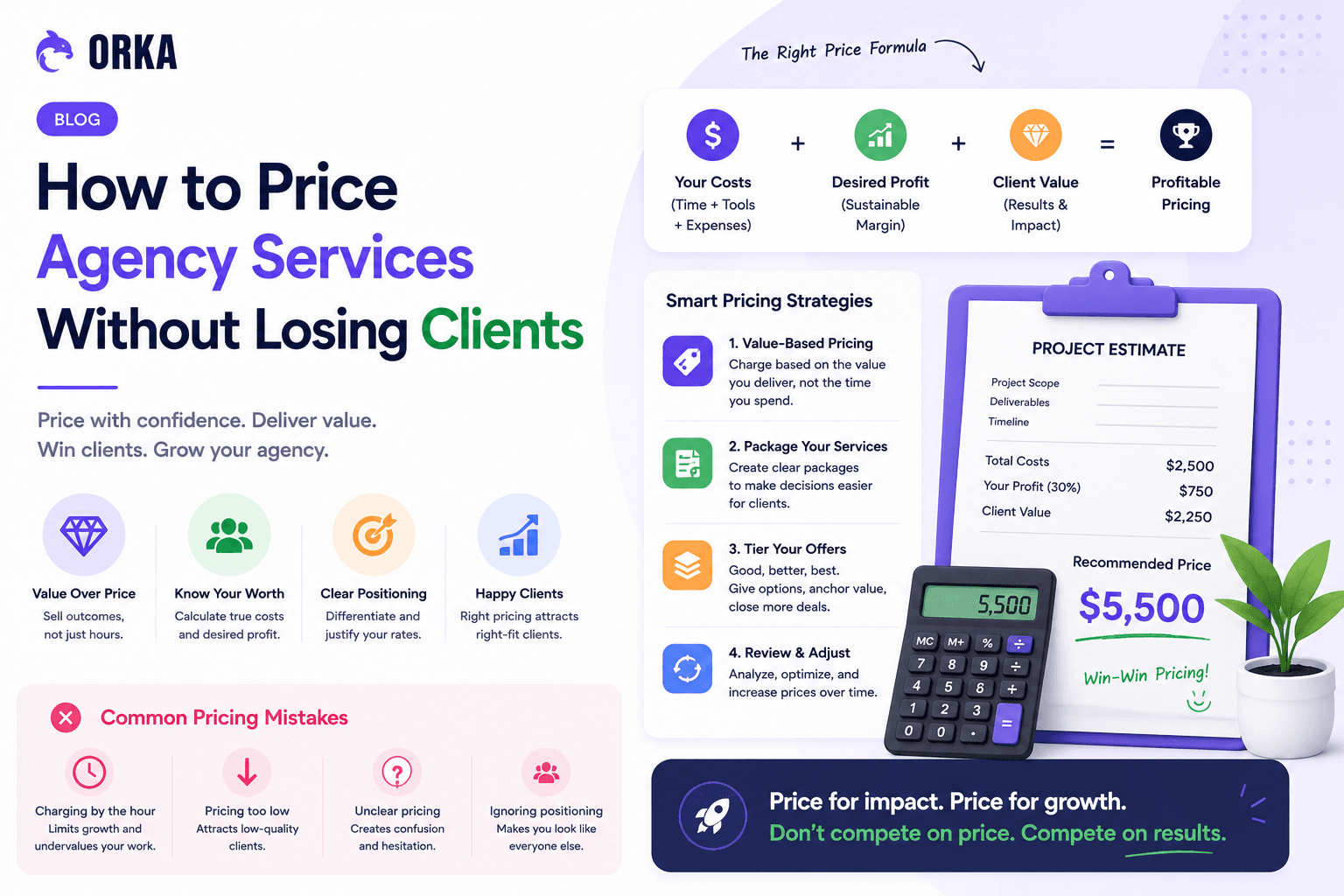
Freelancers often price work by the hour. Agencies rarely do.
Instead, they use pricing models like:
- Fixed-price projects
- Monthly retainers
- Value-based pricing
- Milestone payments
These models create predictable revenue and make growth easier. Clients also appreciate knowing exactly what they'll pay before work begins.
Step 5: Build Strong Client Relationships
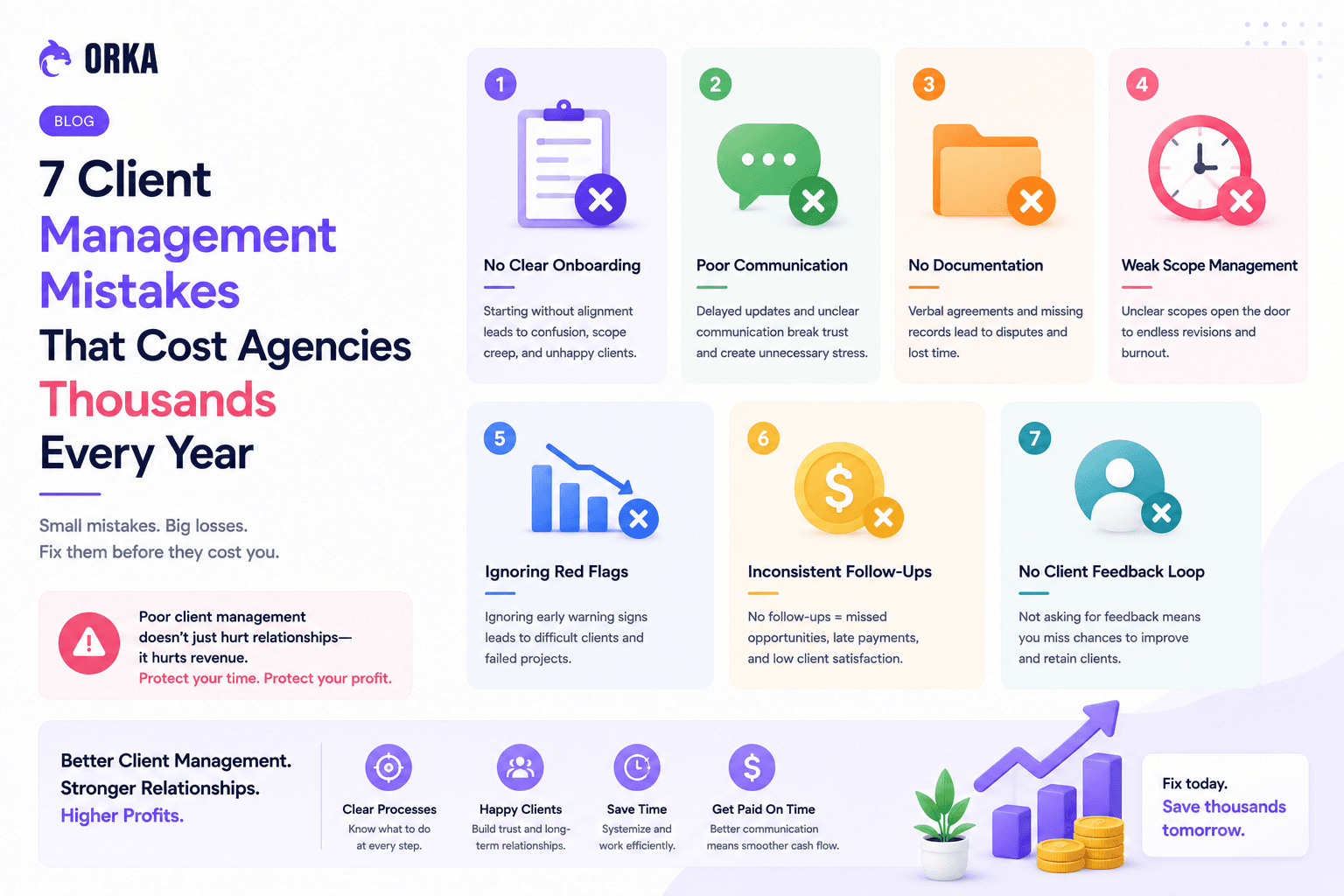
Winning new clients is expensive. Keeping existing clients is profitable.
Great agencies focus on:
- Clear communication
- Regular progress updates
- Transparent timelines
- Reliable delivery
- Professional documentation
Happy clients often become repeat clients — and your best source of referrals.
Step 6: Use Systems Instead of Spreadsheets
As your client list grows, scattered tools quickly become a problem. One project is in Notion. Another contract is in Google Drive. Invoices are somewhere else. Client conversations live in Slack and email.
Instead of adding more tools, centralize your operations. Your business should have one place where you can see:
- Active projects
- Client information
- Contracts
- Proposals
- Payments
- Milestones
- Team progress
Step 7: Measure What Matters
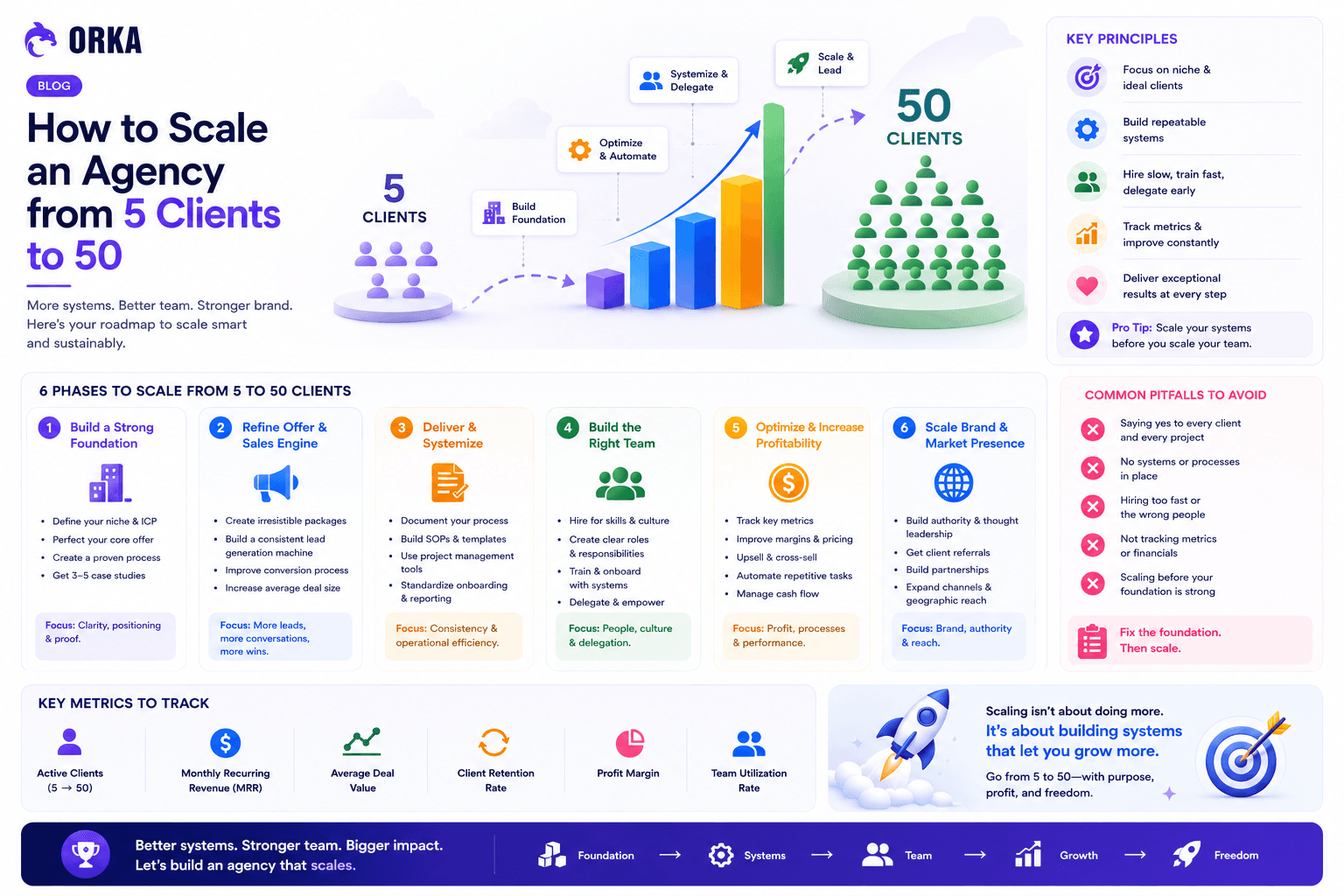
Growth isn't just about revenue. Track metrics like:
- Monthly recurring revenue (MRR)
- Proposal acceptance rate
- Average project value
- Client retention rate
- Project completion time
- Profit margin
- Team utilization
These numbers tell you where your business is improving — and where it needs attention.
Common Mistakes New Agency Owners Make
Avoid these common traps:
- Hiring too early
- Saying yes to every project
- Underpricing services
- Skipping contracts
- Working without documented processes
- Micromanaging every task
- Using too many disconnected tools
How ORKA Helps You Scale Beyond Freelancing
As your business grows, administrative work grows even faster. ORKA helps agencies streamline their operations by bringing everything into one workspace.
With ORKA, you can:
- Generate AI-powered proposals
- Create professional contracts
- Organize client workspaces
- Manage projects and milestones
- Track invoices and payments
- Collaborate with your team
- Monitor every client from a centralized dashboard
Instead of switching between multiple apps, your agency operates from a single operating system designed for modern service businesses.
Final Thoughts
Growing from freelancer to agency owner isn't about working harder. It's about building repeatable systems that allow your business to grow without relying on you for every decision.
Standardize your services. Document your processes. Hire intentionally. Use the right tools.
And most importantly, focus on building a business — not just completing projects.
The sooner you make that mindset shift, the sooner your agency can scale with confidence.
Key Takeaways
- Freelancers sell time; agencies build scalable systems.
- Standardize your services before hiring.
- Create repeatable workflows for every client.
- Hire to solve bottlenecks, not to look bigger.
- Move beyond hourly pricing with fixed or milestone-based models.
- Centralize operations to reduce administrative work.
- Measure business performance using meaningful metrics.
- Strong systems — not longer hours — are what help agencies scale.
Ready to Build an Agency That Scales?
ORKA is the operating system for modern service businesses. Manage proposals, contracts, projects, milestones, payments, clients, and your entire workflow from one unified platform — so you can spend less time on admin and more time growing your agency.