Introduction
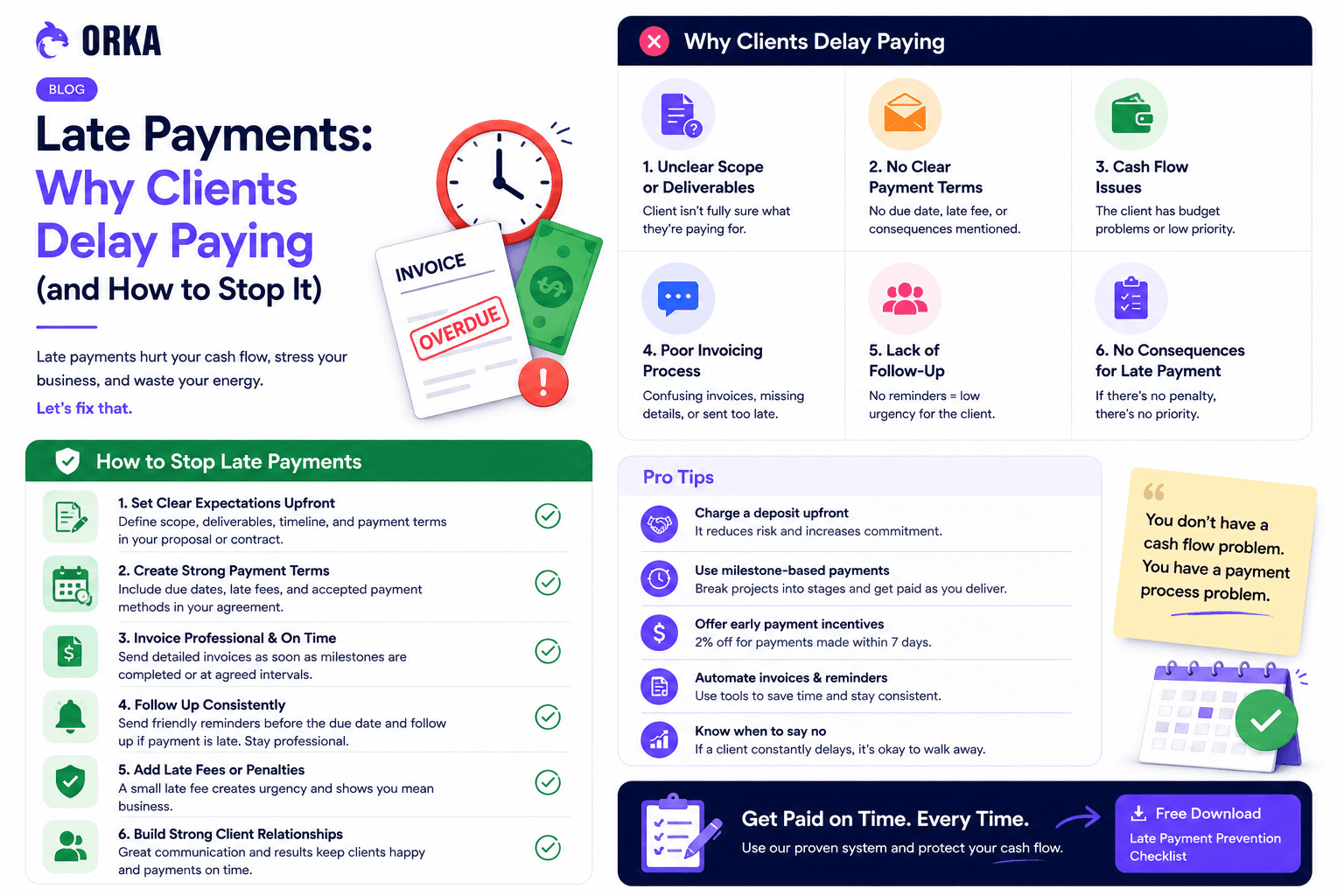
Many agency owners treat invoicing as the final administrative task. They finish the project, open a spreadsheet, create a PDF, email it, then wait. Days turn into weeks. Payments get delayed. Follow-up emails pile up.
The issue usually isn't the client. It's the invoicing process. Let's look at the practices that successful agencies use to get paid faster and keep cash flow healthy.
Why Invoicing Matters More Than You Think
An invoice isn't just a bill. It's a reflection of your professionalism.
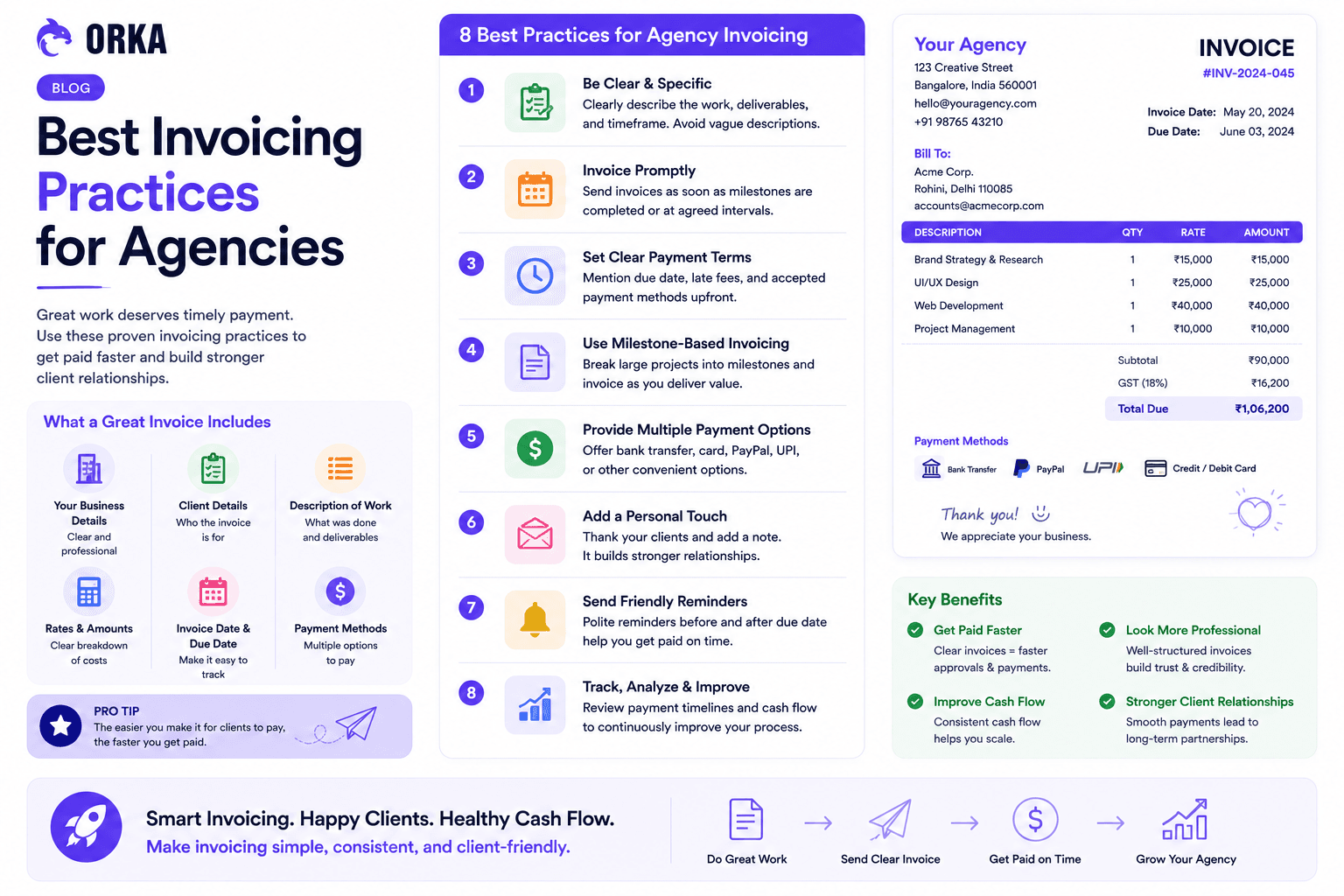
A well-structured invoice tells clients:
- Exactly what they're paying for
- When payment is due
- How to pay
- What's included
Send Invoices Immediately
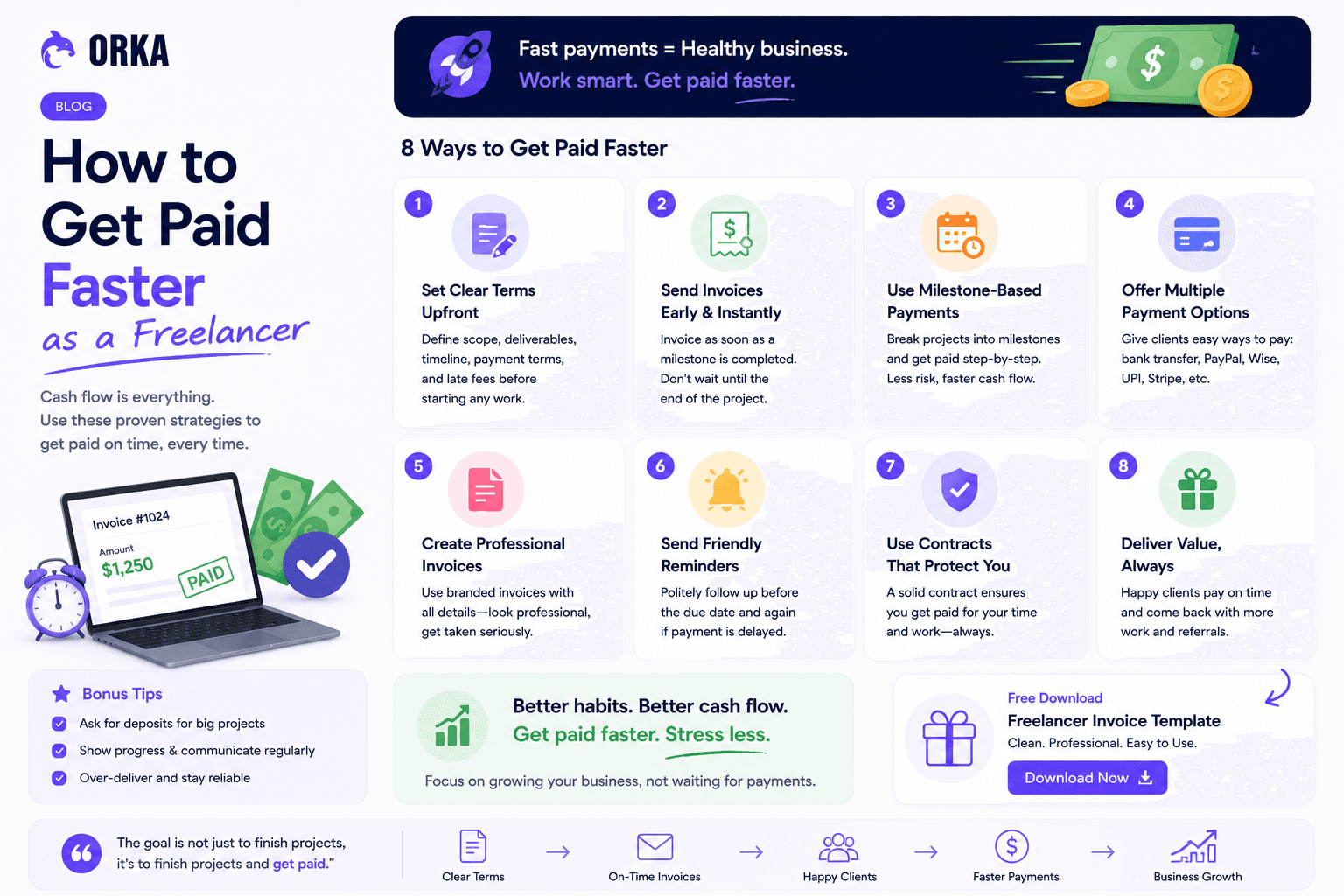
One of the biggest mistakes agencies make is waiting days after completing work. The longer you wait, the longer your payment cycle becomes.
A better workflow looks like this:
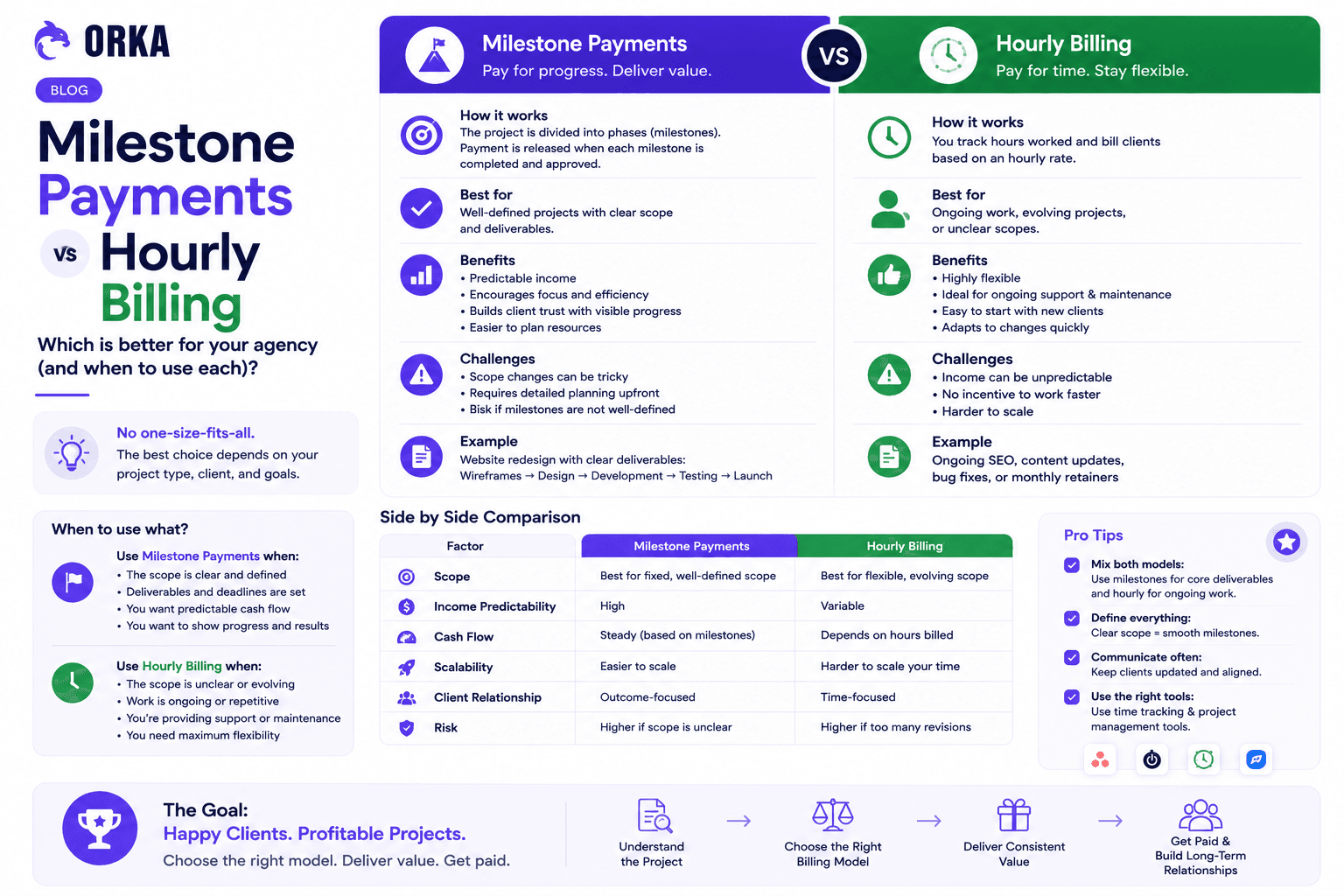
Use Milestone-Based Invoicing
Instead of sending one large invoice after months of work, invoice throughout the project.
Benefits include:
- Better cash flow
- Smaller payments for clients
- Faster approvals
- Reduced financial risk
Clearly Define Payment Terms
Every invoice should answer these questions before the client asks them.
Include:
- Invoice number
- Issue date
- Due date
- Payment methods
- Amount due
- Taxes (if applicable)
- Late payment policy
Make Payment Easy
The more complicated your payment process is, the longer payments usually take. Offer convenient payment methods whenever possible.
- Bank transfer
- Credit or debit cards
- International payment providers
- Secure online payment links
Automate Payment Reminders
Following up manually doesn't scale. As your agency grows, it's easy to forget which invoices are overdue.
A simple schedule might look like:
- Invoice sent
- Reminder three days before due date
- Reminder on due date
- Friendly follow-up five days later
Keep Invoices Consistent
Every invoice should follow the same structure. Consistency improves professionalism and makes life easier for clients.
Include sections such as:
- Agency details
- Client information
- Project name
- Services provided
- Payment summary
- Notes or payment instructions
Connect Invoices to Projects
Invoices shouldn't exist separately from the work they're related to. When invoices are linked to milestones and deliverables, clients immediately understand what they're paying for.
Track Every Invoice
One of the biggest mistakes agencies make is losing visibility after sending an invoice. You should always know:
- Draft invoices
- Sent invoices
- Paid invoices
- Overdue invoices
- Upcoming payments
Traditional Invoicing vs Modern Invoicing
How ORKA Simplifies Agency Invoicing
ORKA connects invoicing with every stage of your client workflow. Instead of switching between different tools, you can:
- Generate AI-powered proposals
- Convert approved proposals into contracts
- Create milestone-based payment schedules
- Automatically generate invoices
- Track invoice status in real time
- Monitor payments from a central dashboard
- Manage projects, payments, and clients in one workspace
Final Thoughts
The best agencies don't chase invoices. They build systems that make payments feel like the natural next step.
Professional invoices. Clear payment terms. Milestone billing. Automated reminders. Real-time tracking.
These simple improvements reduce payment delays, strengthen client relationships, and create predictable cash flow.
Key Takeaways
- Send invoices immediately after milestone approval.
- Break large projects into milestone-based invoices.
- Clearly define payment terms and due dates.
- Offer multiple payment methods to reduce friction.
- Automate reminders instead of manually following up.
- Link invoices directly to project milestones.
- Track invoice status to maintain healthy cash flow.
- A professional invoicing process builds trust and helps agencies scale.
Ready to Simplify Agency Invoicing?
ORKA helps agencies, freelancers, and modern service businesses manage proposals, contracts, milestones, invoices, payments, and client workspaces — all from one unified operating system.
Spend less time on admin and more time delivering great work.