Introduction
You deliver the work. The client says "Looks amazing! We'll process the payment soon." A week passes. Nothing. You send a reminder. Another week passes. Still nothing.
Now you're spending more time following up than actually working.
Late payments don't just hurt your bank account — they interrupt your entire business. The good news? Most payment delays are preventable.
Why Freelancers Get Paid Late
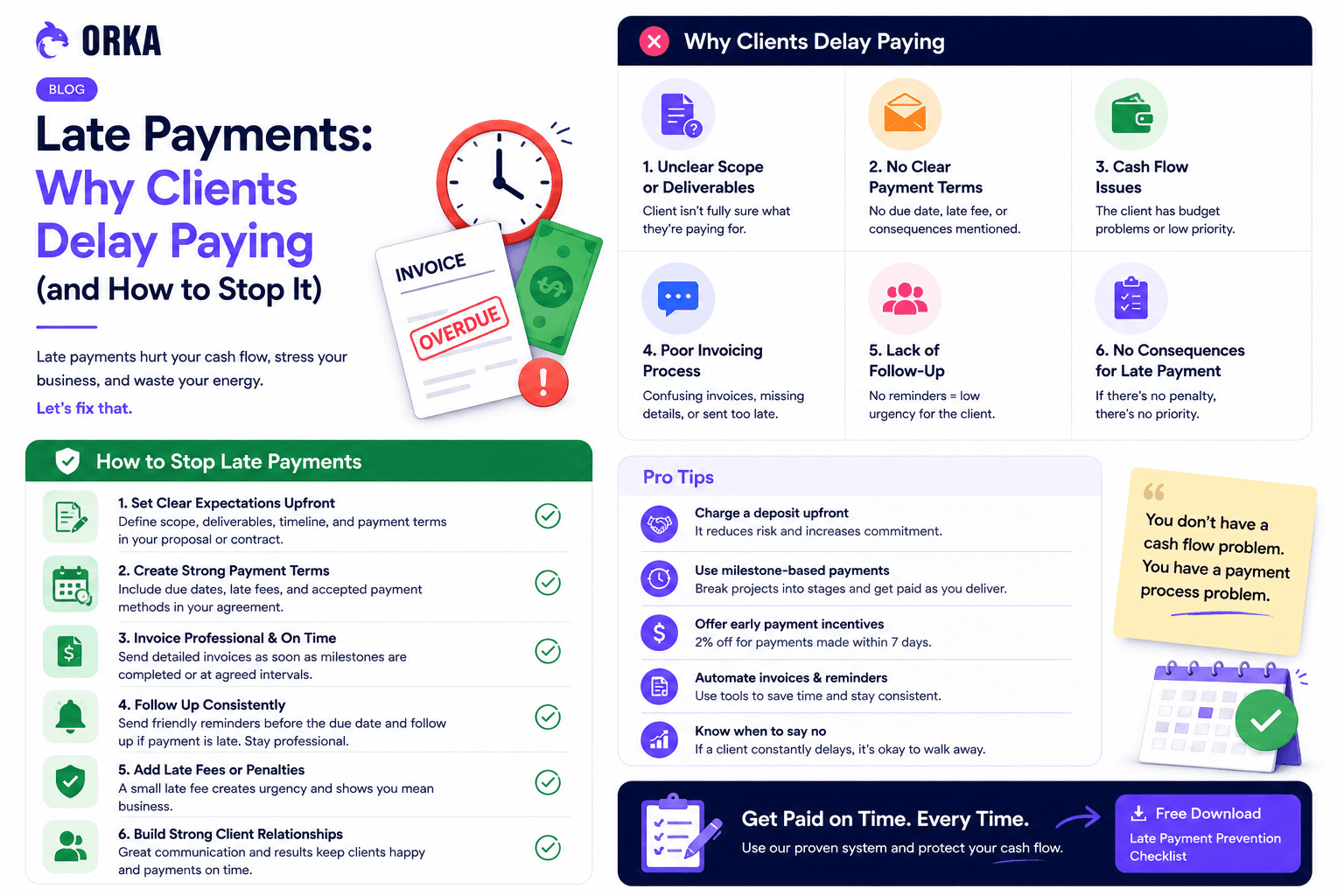
Clients rarely delay payments because they want to avoid paying. Usually, it's because the payment process isn't clearly defined.
Common reasons include:
- No payment terms
- No signed contract
- Invoices sent late
- Large upfront invoices
- Manual payment approvals
- Poor communication
Never Start Without a Contract
A contract isn't just legal protection. It sets expectations.
Your contract should clearly mention:
- Payment schedule
- Due dates
- Late payment policy
- Scope of work
- Revision limits
Ask for an Upfront Deposit
One of the simplest ways to improve cash flow is to request a deposit before starting.
This reduces financial risk for both you and your client. It also confirms the client is committed to the project.
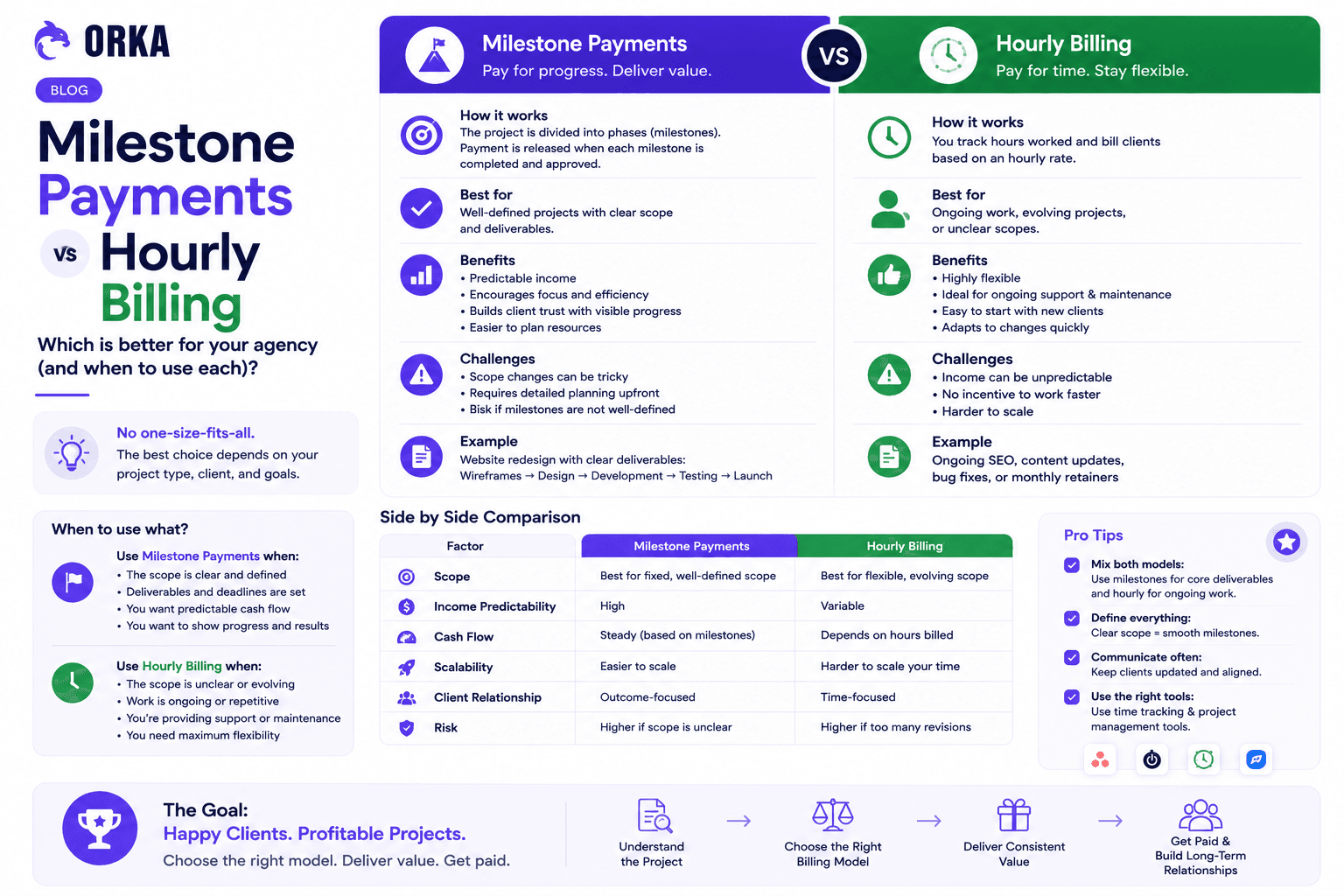
Use Milestone-Based Payments
Instead of waiting until the very end, divide projects into smaller milestones. Each completed milestone triggers a payment.
Benefits include:
- Better cash flow
- Smaller invoices
- Faster approvals
- Stronger client trust
Send Invoices Immediately
Many freelancers wait days before creating an invoice. That delay often leads to even slower payments.
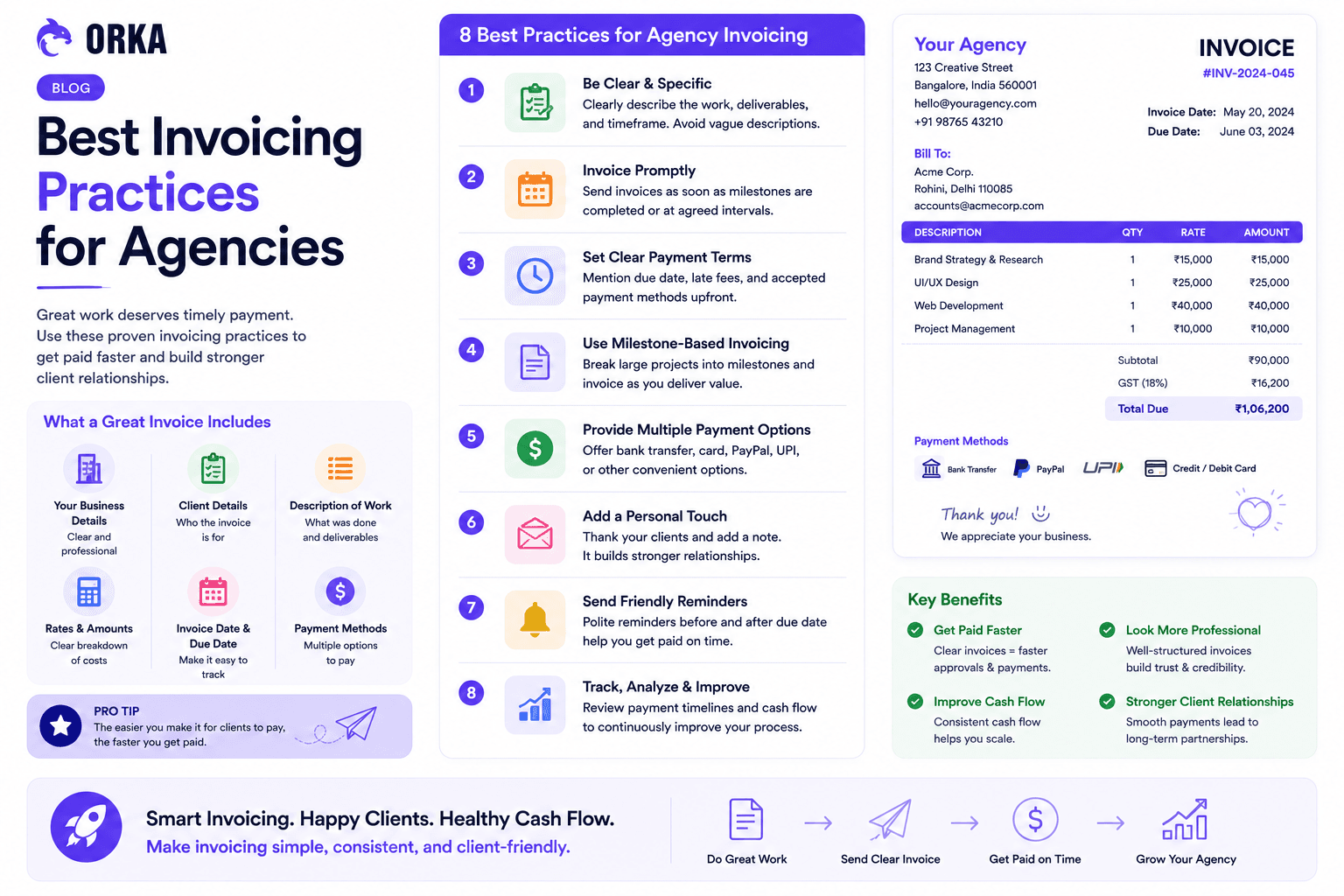
Make invoicing part of your workflow. As soon as a milestone is approved, generate the invoice, send it immediately, and include a clear due date.
Make Paying Easy
The harder it is to pay you, the longer it usually takes.
Provide multiple payment options whenever possible:
- Bank transfer details
- Digital payment links
- Card payment options
- International payment methods (if applicable)
Follow Up Professionally
Payment reminders don't need to feel uncomfortable. Keep them short and polite.
Stop Chasing Payments Manually
As your freelance business grows, manually tracking invoices becomes difficult. You begin asking questions like which invoices are overdue, who has already paid, and which milestones are pending.
Instead of relying on spreadsheets, use tools that automatically track payment status and send reminders.
Traditional Payments vs Modern Payment Workflows
How ORKA Helps Freelancers Get Paid Faster
ORKA was built to eliminate the administrative work around getting paid. Instead of juggling proposals, invoices, contracts, and payment reminders across multiple tools, everything is connected.
With ORKA, you can:
- Generate AI-powered proposals
- Create professional contracts
- Set milestone-based payment schedules
- Track project progress
- Generate invoices automatically
- Monitor payment status
- Manage clients from one workspace
By connecting every stage of the client journey, ORKA helps reduce payment delays and keeps your cash flow healthy.
Final Thoughts
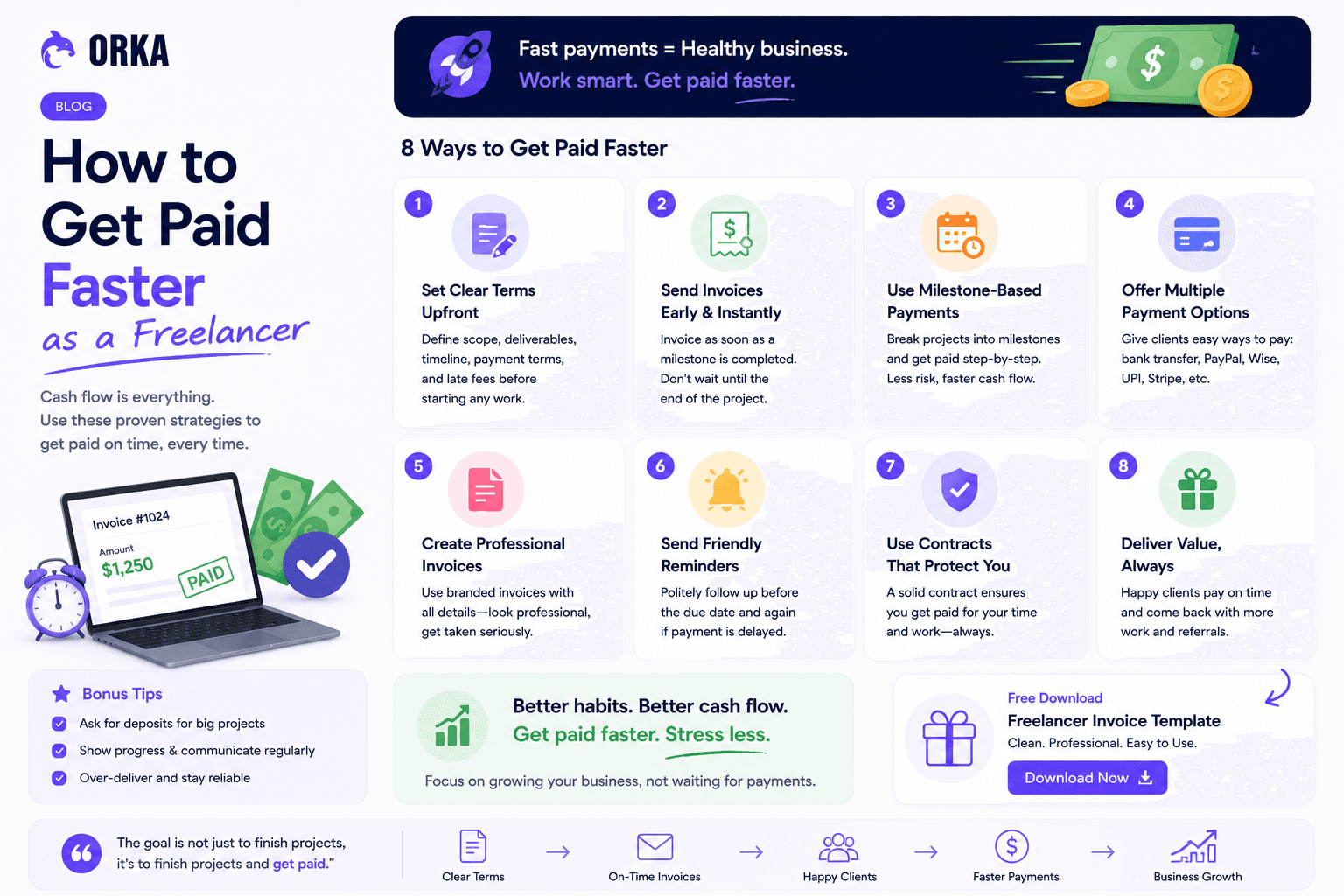
Getting paid on time isn't about sending more reminders. It's about creating a payment process that makes delays less likely from the very beginning.
Clear contracts. Upfront deposits. Milestone payments. Professional invoices. Consistent communication.
These simple systems not only improve your cash flow — they also create a better experience for your clients.
Key Takeaways
- Define payment terms before work begins.
- Always use a signed contract.
- Request an upfront deposit to reduce risk.
- Break large projects into milestone-based payments.
- Send invoices immediately after work is approved.
- Make payment as simple as possible.
- Automate reminders instead of manually chasing invoices.
- Strong payment systems lead to healthier cash flow and happier clients.
Ready to Stop Chasing Payments?
ORKA helps freelancers, agencies, and modern service businesses manage proposals, contracts, milestones, invoices, payments, and client workspaces — all from one unified operating system.
Get paid faster, stay organized, and spend more time doing the work you love.