Introduction
Landing a client is exciting. They loved your proposal. The kickoff call went well. Everyone is eager to get started.
But then... the client asks for "just one small change." That change becomes five more. Deadlines shift. Invoices are delayed.
Suddenly, what looked like a great project becomes frustrating for everyone.
The problem usually isn't the client. It's the lack of clear expectations. A strong contract solves that before it becomes a problem.
Why Contracts Matter More Than Ever
Modern service businesses work remotely. Clients are often in different cities — or different countries. Projects involve multiple stakeholders, changing requirements, and milestone-based delivery.
Without a written agreement, both parties rely on memory. And memory isn't a reliable project management tool.
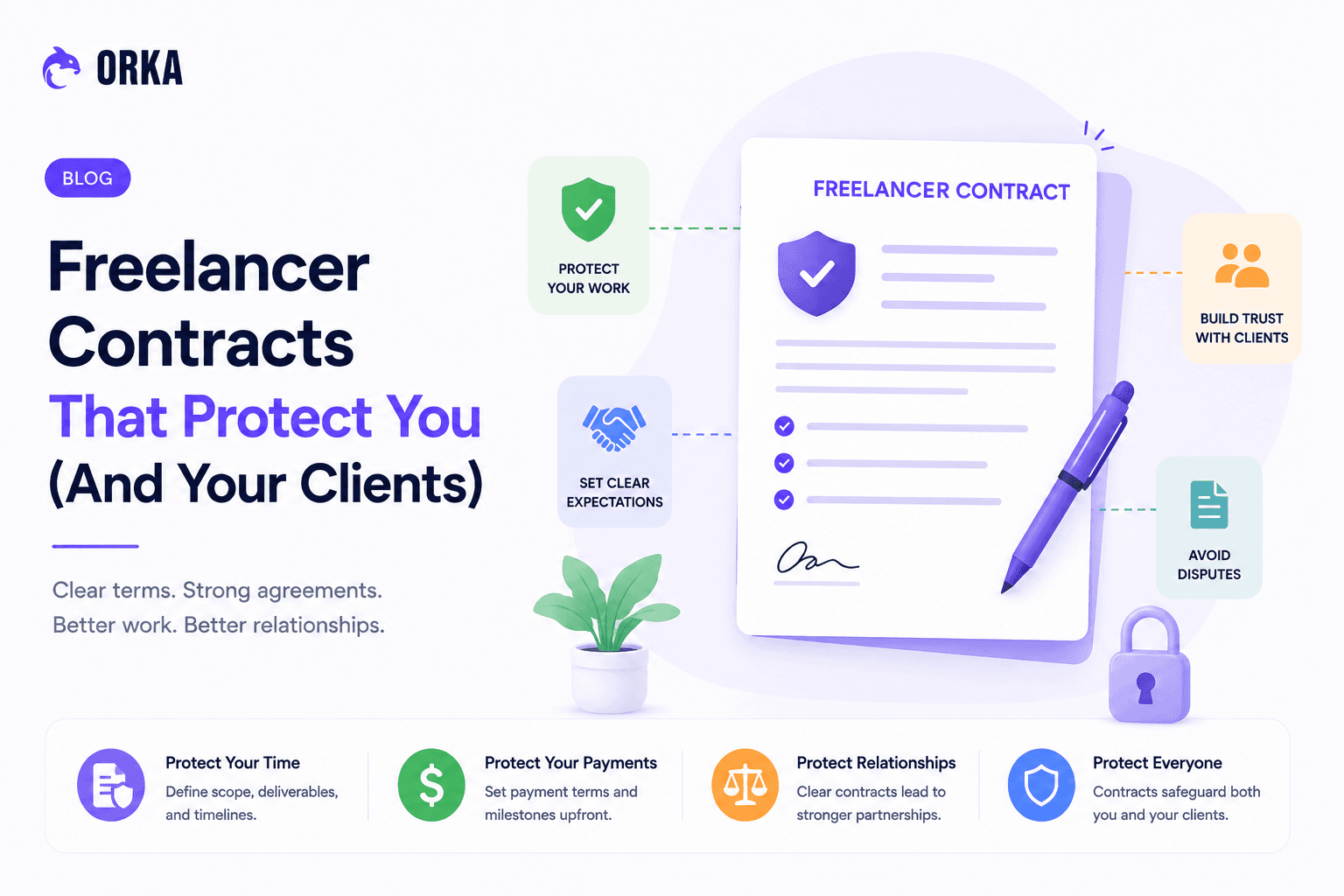
A contract creates a shared understanding of:
- What will be delivered
- When it will be delivered
- How much it costs
- How payments work
- What happens if something changes
Instead of creating friction, contracts remove uncertainty.
What Every Freelancer Contract Should Include
A good contract isn't filled with complicated legal language. It's simply a document that answers every important question before work begins.
1. Define the Scope Clearly
Most project disputes happen because expectations weren't documented. Avoid vague descriptions like "Build a website." Instead, describe exactly what the client is paying for.
The more specific your scope is, the less room there is for misunderstandings.
2. Set Clear Payment Terms
Payment discussions should never happen halfway through a project. Your contract should include:
- Total project price
- Deposit amount (if applicable)
- Milestone payments
- Final payment timeline
- Accepted payment methods
- Late payment policy
When clients know exactly how payments work, there are fewer surprises later.
3. Include a Project Timeline
Deadlines should apply to both parties. A timeline should define:
- Project start date
- Delivery milestones
- Client feedback windows
- Final delivery date
It's also helpful to mention that delayed client feedback may extend the project timeline. This keeps expectations realistic.
4. Define Revision Limits
Unlimited revisions are one of the fastest ways to lose profitability. Instead, specify exactly what's included.
For example:
- Two design revisions
- One development revision
- Additional revisions billed separately
Clients appreciate transparency, and your team avoids endless cycles of changes.
5. Clarify Ownership & Intellectual Property
When does the client officially own the work? Immediately? After final payment? What about source files? Can you showcase the project in your portfolio?
These questions should never be left unanswered. Clearly documenting ownership protects both parties.
6. Add a Cancellation Clause
Sometimes projects need to end early. Your contract should explain:
- How either party can terminate the agreement
- Payment for completed work
- Refund conditions
- Ownership of unfinished deliverables
Having a cancellation policy doesn't mean you expect projects to fail. It means you're prepared if circumstances change.
7. Include Confidentiality
Many projects involve sensitive information. A confidentiality clause reassures clients that you'll protect:
- Business strategies
- Customer information
- Financial data
- Internal documents
- Product ideas
Professionalism builds confidence.
Common Contract Mistakes Freelancers Make
Many freelancers unintentionally create problems by skipping important details. Avoid these mistakes:
- Starting work before the contract is signed
- Using generic contract templates without customization
- Forgetting payment deadlines
- Offering unlimited revisions
- Leaving ownership rights unclear
- Ignoring cancellation terms
- Not documenting deliverables
Contracts Build Better Client Relationships
Some freelancers worry that contracts make projects feel "too formal." In reality, experienced clients expect them.
A contract shows that you have a professional process. It creates confidence because everyone knows exactly what happens next.
Instead of spending time resolving misunderstandings, both sides can focus on creating great work.
How ORKA Makes Contracts Effortless
Creating contracts manually for every project is time-consuming. ORKA simplifies the entire workflow.
With ORKA, you can:
- Generate AI-powered proposals
- Convert approved proposals into professional contracts
- Link contracts directly to project milestones
- Keep approvals, deliverables, and payments connected
- Manage every client agreement from a single workspace
Final Thoughts
A contract isn't about protecting yourself from your clients. It's about protecting the relationship with your clients.
Clear expectations create smoother projects. Smoother projects build stronger trust. And stronger trust leads to repeat business, referrals, and long-term partnerships.
Whether you're an independent freelancer or a growing agency, a professional contract is one of the simplest investments you can make in your business.
Key Takeaways
- Every project should begin with a signed contract.
- Clearly define scope, timelines, deliverables, and revision limits.
- Include transparent payment terms and milestone schedules.
- Protect ownership rights and confidential information.
- A good contract prevents misunderstandings before they happen.
- Professional contracts build trust — not friction.
Ready to Simplify Your Client Workflow?
ORKA helps freelancers, agencies, and modern service businesses generate proposals, create contracts, manage milestones, and handle payments — all from one unified workspace.
Spend less time on paperwork and more time delivering exceptional work.