Introduction
Every freelancer and agency eventually encounters one. The client who keeps changing requirements, the one who disappears for two weeks and suddenly wants everything delivered tomorrow, or the one who requests 'just one small change' ten times.
While difficult clients are inevitable, stressful projects don't have to be. The key isn't learning how to argue with clients. It's learning how to manage projects professionally.
What Makes a Client 'Difficult'?
Not every challenging client is unreasonable. Sometimes they're simply under pressure from their own stakeholders, managing unrealistic deadlines, unfamiliar with your workflow, or unsure of what they actually need.
Set Expectations Before Work Begins
Many difficult situations start because expectations were never documented. Before the project begins, clearly define:
- Scope of work
- Deliverables
- Timeline
- Revision limits
- Payment schedule
- Communication process
- Approval workflow
Recognize Scope Creep Early
One of the biggest challenges agencies face is scope creep. It usually sounds harmless: 'Can we add one more page?', 'This should only take five minutes,' or 'While you're there, can you also...'
One request isn't the problem. Dozens of 'small' requests become unpaid work.
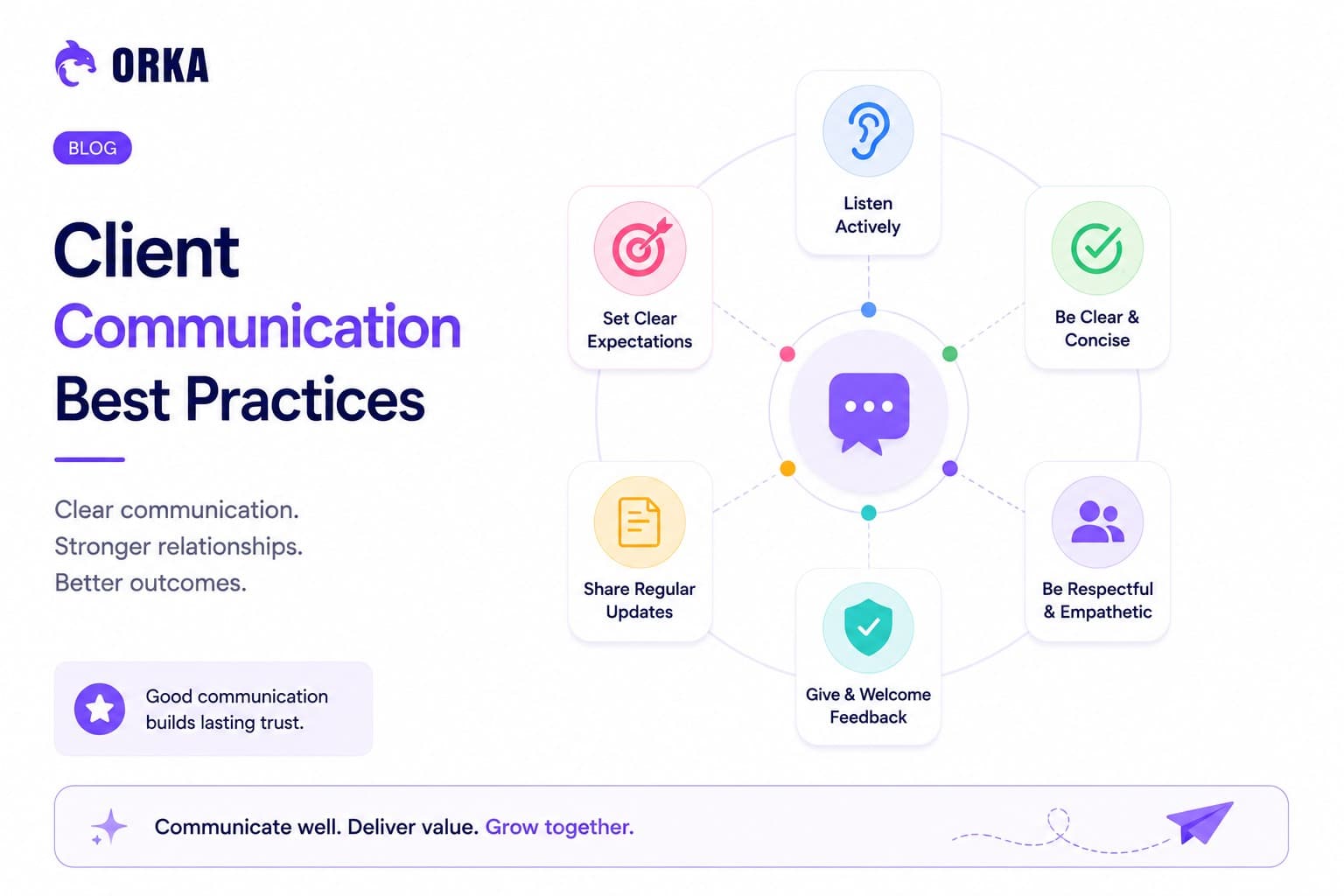
Keep Communication Calm
When a client becomes frustrated, it's easy to react emotionally. Don't.
Instead:
- Respond with facts
- Avoid blame
- Ask clarifying questions
- Focus on solutions
Document Important Decisions
Verbal conversations are easy to forget. After meetings, summarize:
- Decisions made
- Approved changes
- Updated timelines
- Action items
- Responsibilities
Don't Be Afraid to Say No
Many freelancers fear saying no because they worry about losing clients. In reality, respectful boundaries often increase trust.
Instead of simply saying no, try: 'I'd be happy to help with that. Since it's outside the current scope, I'll prepare an updated estimate.'
Manage Delayed Feedback
Some projects stall because clients take weeks to respond. Meanwhile, your schedule stays blocked.
Prevent this by agreeing on response timelines:
- Feedback expected within 3 business days
- Delays may affect delivery dates
- Major changes restart milestone timelines
Handle Late Payments Professionally
Late payments happen. The solution isn't sending angry emails.
Instead:
- Send friendly reminders
- Reference the agreed payment terms
- Keep communication professional
- Pause work if payment milestones aren't met
Know When to Walk Away
Not every client relationship should continue. Consider ending a project if a client repeatedly:
- Ignores signed agreements
- Refuses to pay
- Becomes abusive
- Demands unlimited free work
- Creates an unhealthy working environment
Turn Difficult Projects Into Better Systems
Every challenging client reveals a weakness in your process. After each project, ask:
- What caused the issue?
- Could this have been prevented?
- Should our proposal be clearer?
- Do we need stronger contracts?
- Should onboarding improve?
Great Client Management Is Proactive
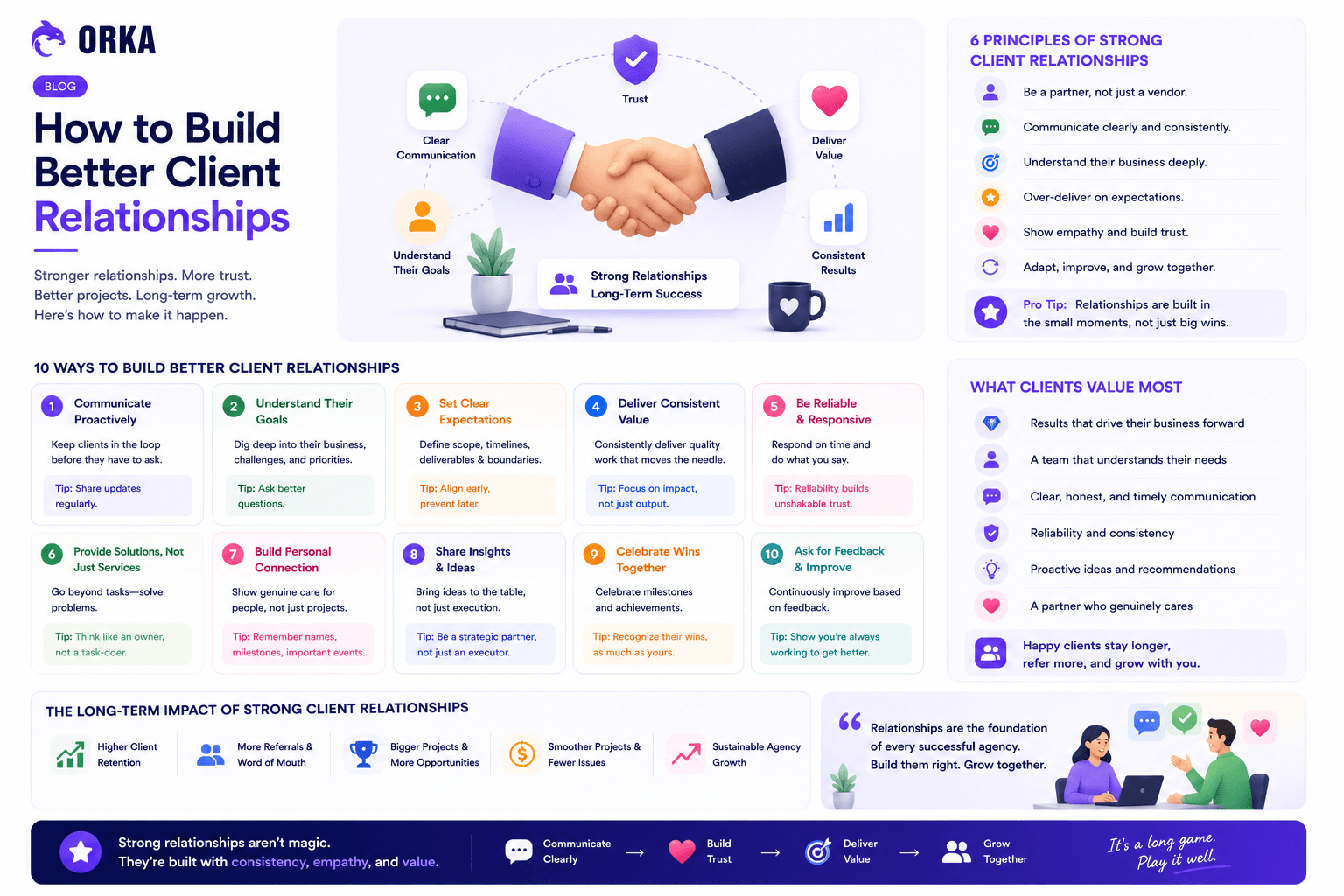
The best agencies don't spend their time solving client problems. They build systems that prevent those problems.
That means clear proposals, professional contracts, defined milestones, transparent communication, organized documentation, and predictable payment workflows.
How ORKA Helps Agencies Manage Client Relationships
ORKA helps agencies create a structured client experience from day one. Instead of juggling conversations across emails, spreadsheets, and chat apps, everything lives in one connected workspace.
With ORKA, you can:
- Generate AI-powered proposals
- Create professional contracts
- Define project milestones
- Track approvals
- Centralize client communication
- Organize files and deliverables
- Generate invoices
- Manage payments
- Keep every project timeline visible to both your team and the client
Final Thoughts
Difficult clients are part of running a service business. But difficult projects don't have to become disasters.
The agencies with the strongest reputations aren't the ones that never face challenges. They're the ones that handle challenges professionally.
Set expectations early. Communicate consistently. Document everything. Respect your own boundaries.
Key Takeaways
- Most client conflicts come from unclear expectations, not bad intentions.
- Define scope, timelines, revisions, and payment terms before work begins.
- Address scope creep professionally instead of absorbing unpaid work.
- Document important decisions after every meeting.
- Keep communication calm, factual, and solution-oriented.
- Use structured payment workflows to reduce late-payment issues.
- Improve your systems after every challenging project.
- ORKA helps agencies reduce client friction by connecting proposals, contracts, milestones, communication, invoices, and payments into one organized workspace.
Ready to Create Smoother Client Projects?
ORKA is the operating system for modern service businesses. From AI-powered proposals and contracts to project management, milestone tracking, invoices, payments, and dedicated client workspaces, ORKA helps agencies replace chaos with clarity.
Because the best client relationships are built on great systems — not constant firefighting.