Introduction
Every freelancer or agency has heard it before: 'Can we add just one more page?', 'This shouldn't take long,' or 'Since you're already working on it...'
Individually, these requests seem harmless. Collectively, they can add days — or even weeks — to a project without increasing your revenue.
The good news? Scope creep is preventable. Not by saying no to clients, but by creating better systems from the very beginning.
What Is Scope Creep?
Scope creep happens when work expands beyond the original agreement without adjusting the timeline, budget, or deliverables.
It often appears in small ways:
- Extra design revisions
- Additional pages or features
- New integrations
- Expanded project requirements
- Last-minute changes before launch
Why Scope Creep Happens
Scope creep isn't always the client's fault. In many cases, it happens because expectations were never clearly defined.
Common causes include:
- Vague proposals
- Missing contracts
- Undefined deliverables
- Unlimited revisions
- Poor communication
- No formal approval process
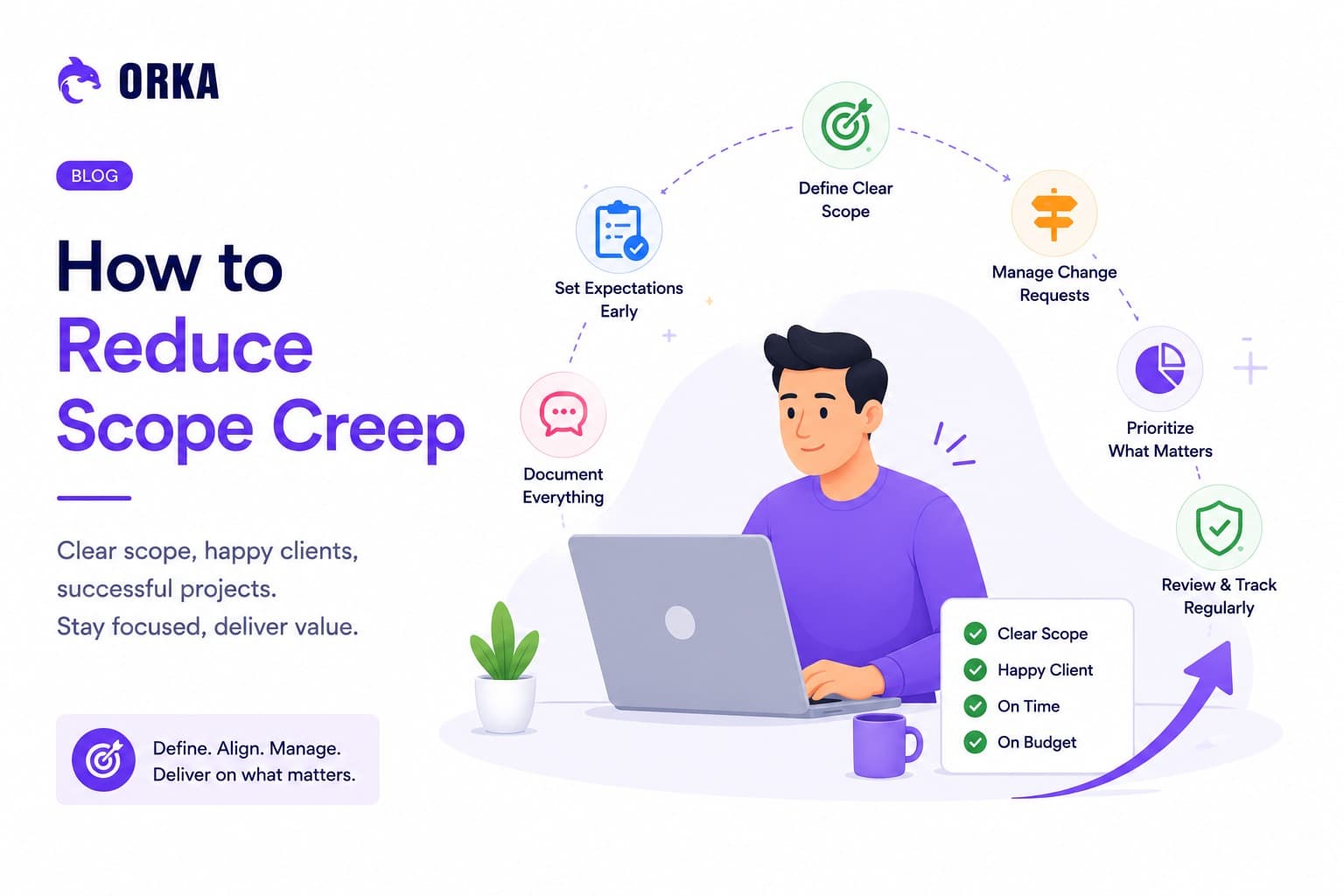
Start with a Detailed Proposal
Your proposal is your first line of defense. Instead of saying 'Website Development,' define exactly what's included.
Use a Clear Contract
A proposal explains what you're offering. A contract explains how you'll work together.
Your contract should include:
- Project scope
- Deliverables
- Timeline
- Revision limits
- Payment schedule
- Change request process
Break Projects into Milestones
Large projects feel overwhelming. Breaking them into milestones keeps everyone aligned.
Define Revision Limits
Unlimited revisions almost always lead to scope creep. Instead, define what's included.
If additional revisions are needed, they're handled as a separate request.
Create a Change Request Process
New ideas during a project aren't necessarily a problem. The problem is implementing them without evaluating their impact.
A simple process works well:
- Receive the request
- Review its impact
- Estimate additional cost and timeline
- Get client approval
- Begin the new work
Keep Everything Documented
Verbal agreements are easy to forget. Whenever project requirements change:
- Update the scope
- Confirm the timeline
- Document pricing changes
- Share written approval
Communicate Early
The longer you wait to discuss scope changes, the more difficult the conversation becomes.
Instead of saying 'That's outside the scope,' try: 'I'd be happy to help. Since this wasn't included in the original project, I'll prepare an updated estimate so we can add it properly.'
Focus on Value, Not Free Work
Many freelancers fear charging for additional work because they don't want to upset clients. In reality, professional clients expect transparency.
How ORKA Helps Prevent Scope Creep
Scope creep usually happens because project information is scattered. ORKA keeps everything connected from day one.
With ORKA, you can:
- Generate detailed AI-powered proposals
- Create professional contracts
- Define clear deliverables
- Organize project milestones
- Track approvals
- Manage change requests
- Keep client communication in one workspace
- Connect invoices directly to completed milestones
Final Thoughts
Scope creep isn't a sign that clients are difficult. It's usually a sign that expectations weren't documented clearly enough.
The most successful agencies don't avoid additional requests. They simply have a process for handling them.
Clear proposals. Professional contracts. Defined milestones. Structured approvals. Transparent communication.
Key Takeaways
- Scope creep happens when projects expand without updating the budget or timeline.
- Prevent it with detailed proposals and clear contracts.
- Define deliverables and revision limits before work begins.
- Use milestones to keep projects organized and transparent.
- Document every change request and approval.
- Communicate scope changes early and professionally.
- ORKA helps agencies reduce scope creep by connecting proposals, contracts, milestones, approvals, invoices, and client communication into one organized workspace.
Ready to Deliver Projects Without Scope Creep?
ORKA is the operating system for modern service businesses. Generate AI-powered proposals, create contracts, manage milestones, organize client workspaces, track approvals, and streamline payments — all from one connected platform.
Build projects with clarity, protect your margins, and create a better experience for every client.