Introduction
Why This Confuses So Many People
Imagine this. A potential client reaches out asking for a quote. You immediately send an invoice. The client is confused.
Or maybe you send a proposal, the client accepts it, and you assume the project has officially started — without ever signing a contract. A few weeks later, the project scope changes and payment becomes a problem.
The issue wasn't your work. The issue was using the wrong document at the wrong stage.
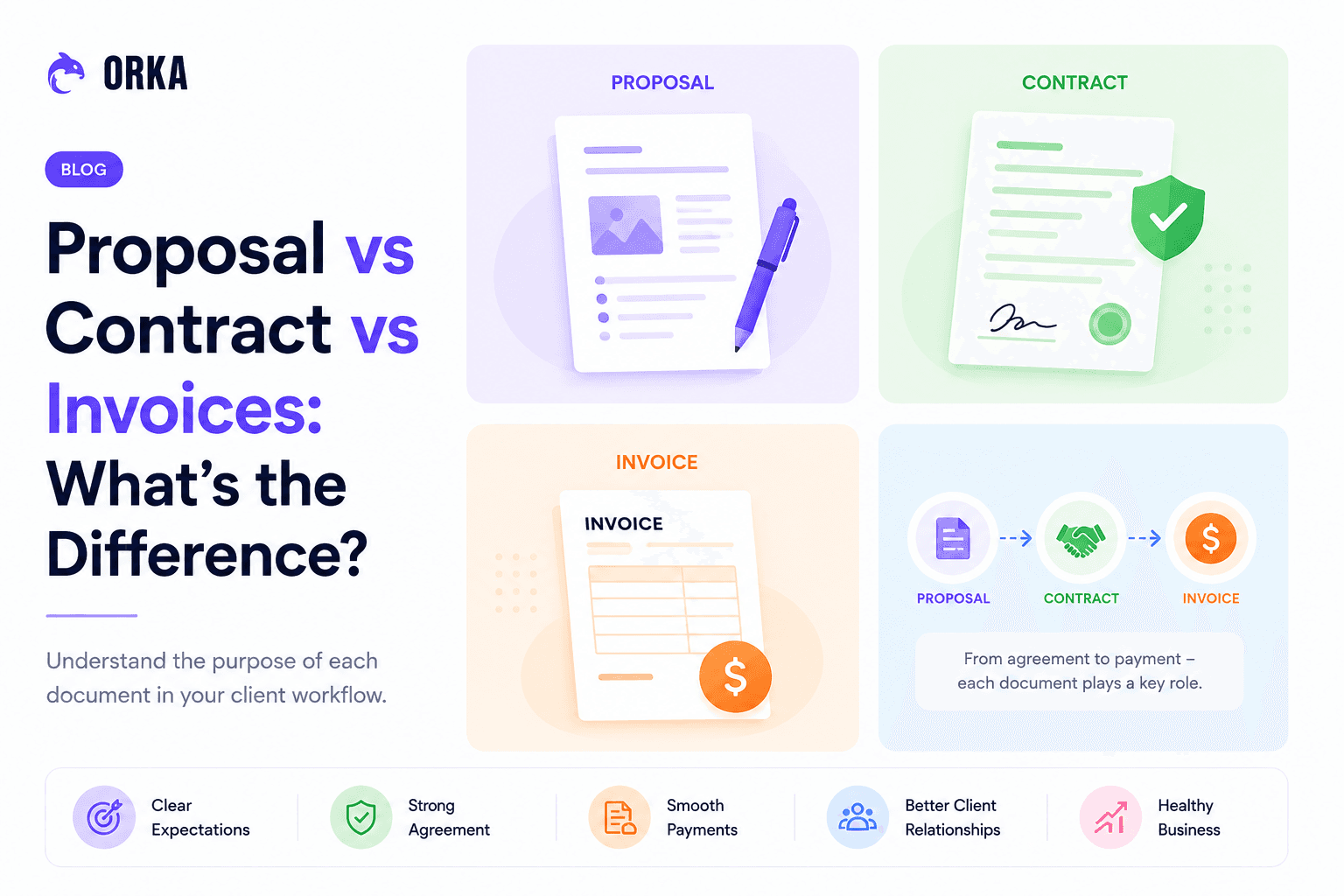
Every successful client project follows a simple sequence:
- Lead
- Proposal
- Contract
- Project
- Invoice / Payment
Understanding this flow makes your business look more professional and dramatically reduces misunderstandings.
What Is a Proposal?
A proposal is a sales document. Its purpose is to convince a potential client to hire you. Think of it as your pitch.
A great proposal explains:
- The client's problem
- Your proposed solution
- Scope of work
- Deliverables
- Timeline
- Pricing
- Why you're the right choice
A proposal is not legally binding. It simply helps the client decide whether they want to work with you.
What Is a Contract?
Once the client accepts your proposal, it's time for a contract. A contract is a legal agreement between you and your client. Instead of selling your services, it defines how you'll work together.
A contract usually includes:
- Project scope
- Payment terms
- Timeline
- Revision policy
- Intellectual property
- Confidentiality
- Cancellation terms
Unlike a proposal, a contract protects both parties. Everyone knows exactly what's expected.
What Is an Invoice?
An invoice is a payment request. Its job is simple: tell the client how much they owe and when payment is due.
A professional invoice typically includes:
- Invoice number
- Client information
- Services provided
- Amount due
- Payment deadline
- Payment method
Invoices should never replace proposals or contracts. They only come into the workflow after payment becomes due.
The Biggest Mistake Service Businesses Make
Many freelancers skip one of these documents entirely. Some send only invoices. Others work with only proposals. Some never create contracts. That creates unnecessary risk.
For example:
- Proposal without a contract — the client approves the project, but expectations aren't documented.
- Contract without a proposal — the client signs legal documents before understanding your solution.
- Invoice without either — the client receives a payment request without any agreed scope or timeline.
Proposal vs Contract vs Invoice
Each document has a different purpose. Together, they create a smooth client experience.
The Modern Client Workflow
Instead of juggling PDFs, email threads, and spreadsheets, modern agencies are moving toward connected workflows.
- Discovery Call
- AI Proposal
- Client Approval
- Digital Contract
- Project Milestones
- Escrow / Payment
- Invoice
- Project Completed
Each step naturally leads to the next. Nothing gets lost. Nothing needs to be recreated.
How ORKA Connects Everything
Most service businesses use separate tools for every stage — Google Docs for proposals, PDF software for contracts, accounting software for invoices, project management tools for delivery, and email for approvals.
The result? Scattered information and unnecessary admin work.
ORKA brings the entire workflow into one platform. With ORKA, you can:
- Generate AI-powered proposals
- Turn approved proposals into contracts
- Track milestones
- Manage client approvals
- Handle escrow-backed payments
- Generate invoices
- Keep every client document connected inside one workspace
Instead of switching between five different tools, everything stays organized from the first conversation to the final payment.
Final Thoughts
Proposals, contracts, and invoices aren't interchangeable. They each solve a different problem.
- A proposal helps you win the work.
- A contract helps you deliver the work with confidence.
- An invoice helps you get paid for the work.
When used together, they create a professional client experience that builds trust, reduces disputes, and helps your business grow.
If you're still managing these documents across multiple tools, it may be time to rethink your workflow.
Key Takeaways
- A proposal is used to win new business.
- A contract protects both the client and the service provider.
- An invoice is a formal request for payment.
- Every client project should use all three documents.
- Following the correct workflow reduces confusion and builds trust.
- Platforms like ORKA simplify the entire process by connecting proposals, contracts, projects, and payments in one place.
Ready to Simplify Your Client Workflow?
ORKA helps freelancers, agencies, and modern service businesses manage every stage of the client journey — from AI-powered proposals and digital contracts to milestones, invoices, and payments — all from one unified workspace.
Spend less time on admin and more time delivering exceptional work.